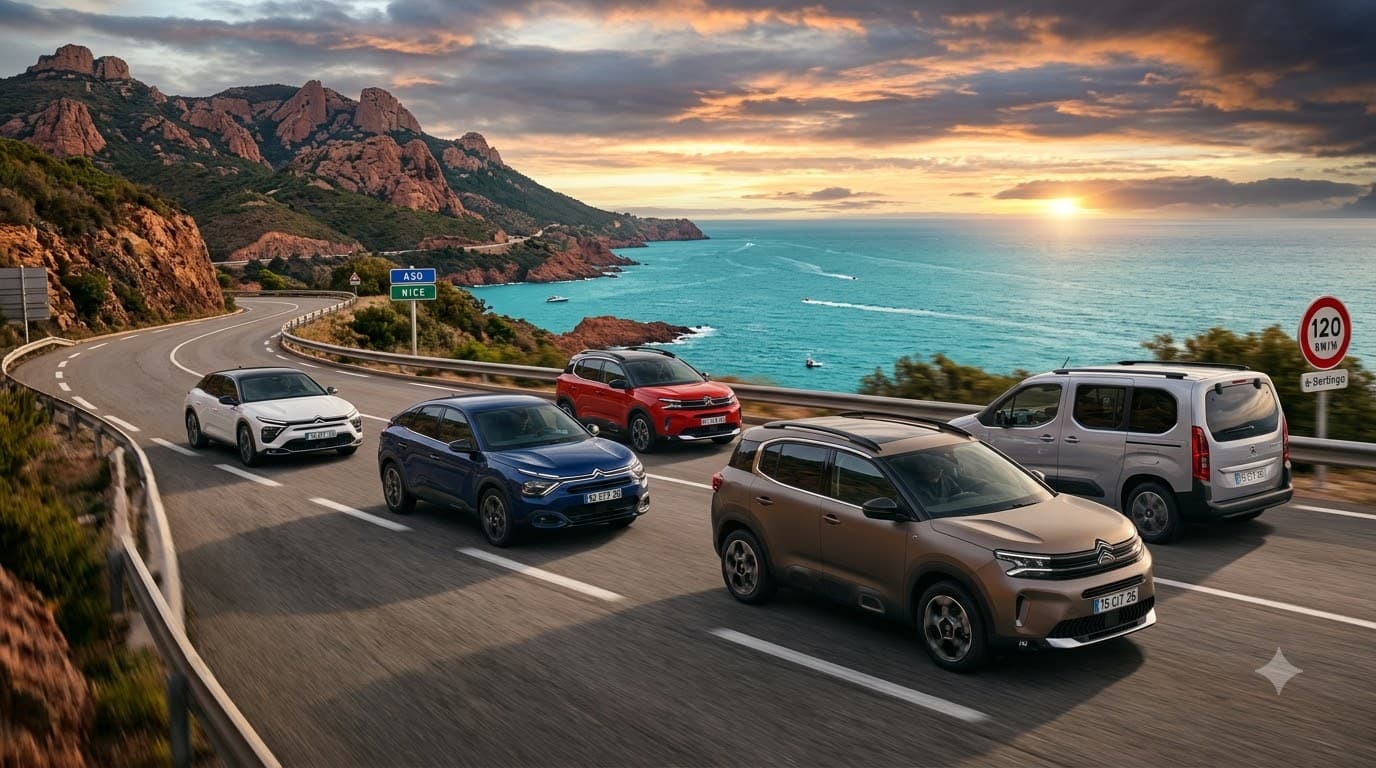
Citroën is not merely an automobile manufacturer; it is a monument to French avant-garde engineering and an unapologetic celebration of the unconventional. Since its inception in 1919, Citroën has consistently refused to conform, prioritizing radical innovation, striking aesthetics, and unparalleled comfort over safe, predictable design. The brand has weathered immense financial turbulence, corporate takeovers, and changing global tastes, yet it has never lost its uniquely quirky, brilliantly innovative soul.
André Citroën and the Dawn of Mass Production
The story begins with André Citroën, a brilliant industrialist who had already made his mark manufacturing armaments during the First World War. When the war ended, his massive factory in Paris sat idle. Inspired by Henry Ford's methods in America, André pivoted to automobile manufacturing with a singular vision: to bring the automobile to the European masses.
In 1919, the Type A was launched. It was Europe's first mass-produced car and an immediate success. But André Citroën was not just a manufacturer; he was a master of marketing and spectacle. He utilized the Eiffel Tower as the world’s largest billboard, illuminating it with the Citroën name from 1925 to 1934. He sponsored grueling expeditions across the Sahara Desert and Asia using half-track vehicles to prove their durability. His ambition was boundless, and it propelled the brand to the forefront of the European automotive industry.
The company's iconic double-chevron logo itself pays homage to André's pre-war business: manufacturing helical gears with distinct herringbone teeth, a design that offered smooth, quiet power transmission—a fitting metaphor for the cars that would follow.
"Innovation is not just about technology. It is about understanding how people live and bringing them well-being and serenity."
The Traction Avant: A Technological Marvel and Financial Ruin
By the early 1930s, André Citroën embarked on his most ambitious project yet: the Traction Avant. Unveiled in 1934, this car was nothing short of revolutionary. It completely discarded the standard automotive architecture of the era. It featured front-wheel drive, a monocoque (unibody) construction without a separate frame, independent suspension, and hydraulic brakes.
The Traction Avant handled better, rode smoother, and sat lower than anything else on the road. It was decades ahead of its time and forced the entire industry to rethink how cars were built. However, the immense development costs, coupled with the need to rebuild the factory to produce it, bankrupted the company. In 1934, facing financial collapse during the Great Depression, Michelin, the company's largest creditor, took control of Citroën. Tragically, André Citroën passed away a year later, never fully witnessing the monumental, long-term success of the Traction Avant, which remained in production until 1957.
The First Mass-Produced Car in Europe
André Citroën launches the Type A, bringing assembly-line manufacturing to Europe and making cars accessible to the public.
-factory-assembly-line-hi….jpeg)
The Revolutionary Traction Avant
Citroën introduces front-wheel drive and monocoque construction. Despite its brilliance, development costs bankrupt the company, leading to a Michelin takeover.
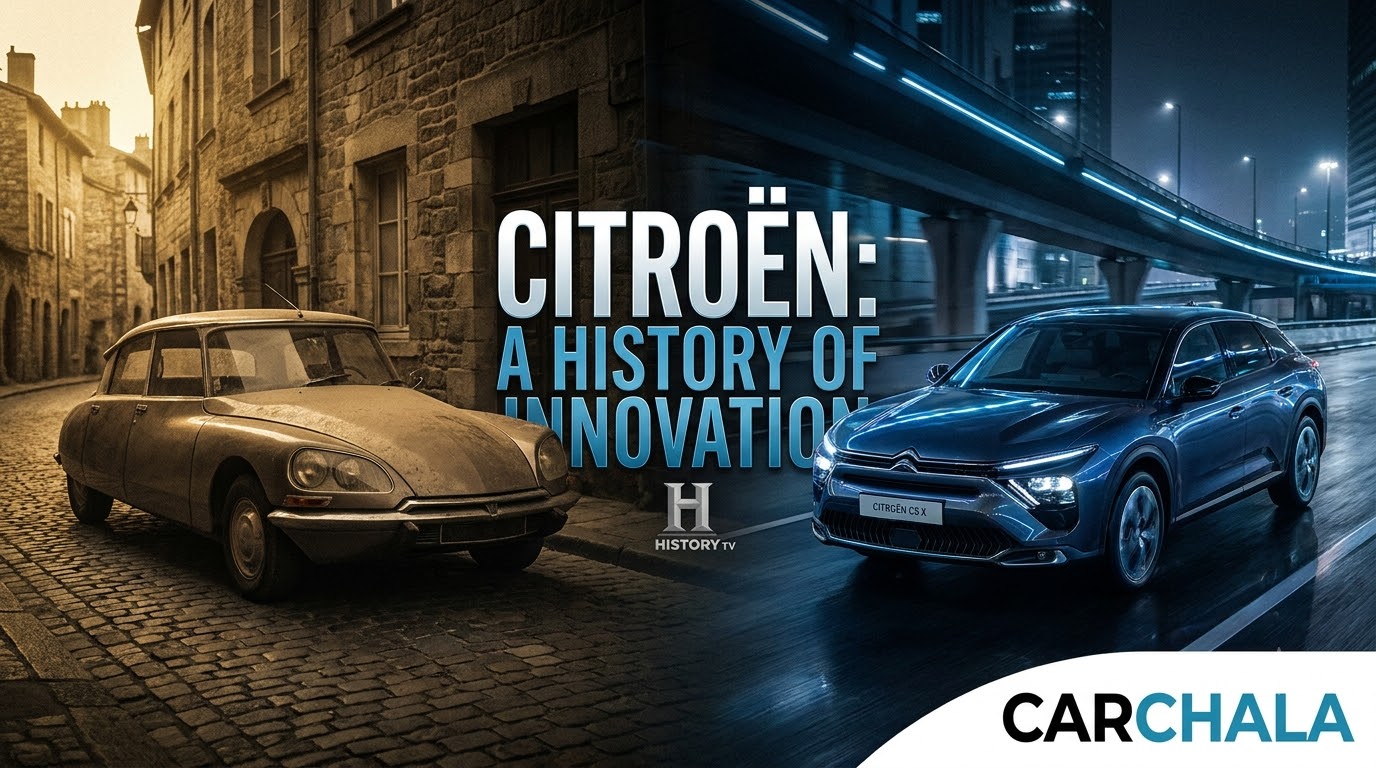
The Umbrella on Wheels
The minimalist 2CV is launched to mobilize rural France. It becomes a cultural icon, renowned for its simple brilliance and indestructible nature.
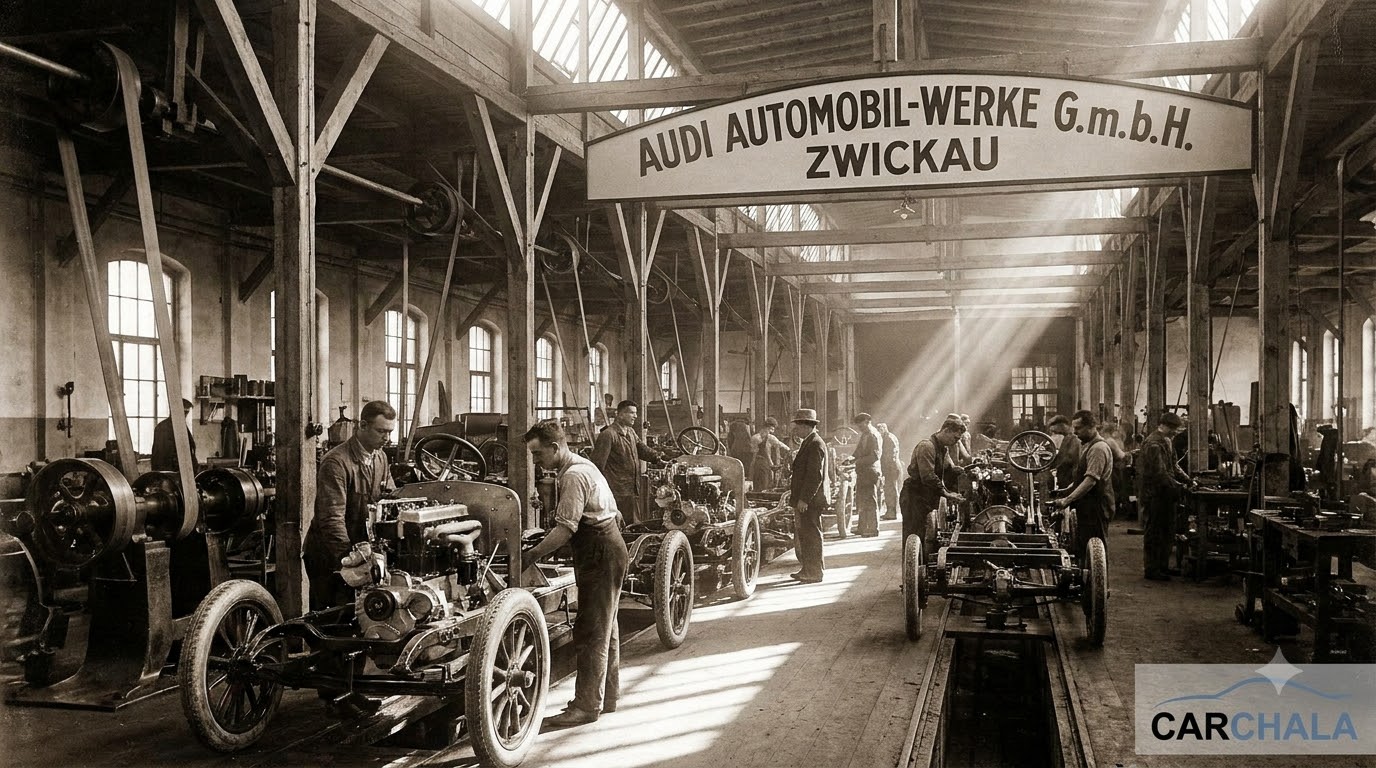
The Goddess Arrives
The DS is unveiled at the Paris Motor Show. Its futuristic aerodynamic design and hydropneumatic suspension stun the world.
Formation of the PSA Group
Facing financial difficulties again, Peugeot acquires Citroën, forming the PSA Peugeot Citroën group to stabilize the brand.

The Ami Revolutionizes Urban Mobility
Citroën launches the Ami, an ultra-compact, quirky electric quadricycle designed to democratize urban electric transport.
Joining the Stellantis Empire
The PSA Group merges with Fiat Chrysler Automobiles, making Citroën a key player within the massive new Stellantis conglomerate.
The ë-C3 Democratizes EVs
Citroën aggressively pushes into the affordable electric market with the ë-C3, bringing accessible electric mobility to Europe and emerging markets.
The C-Cubed Expansion
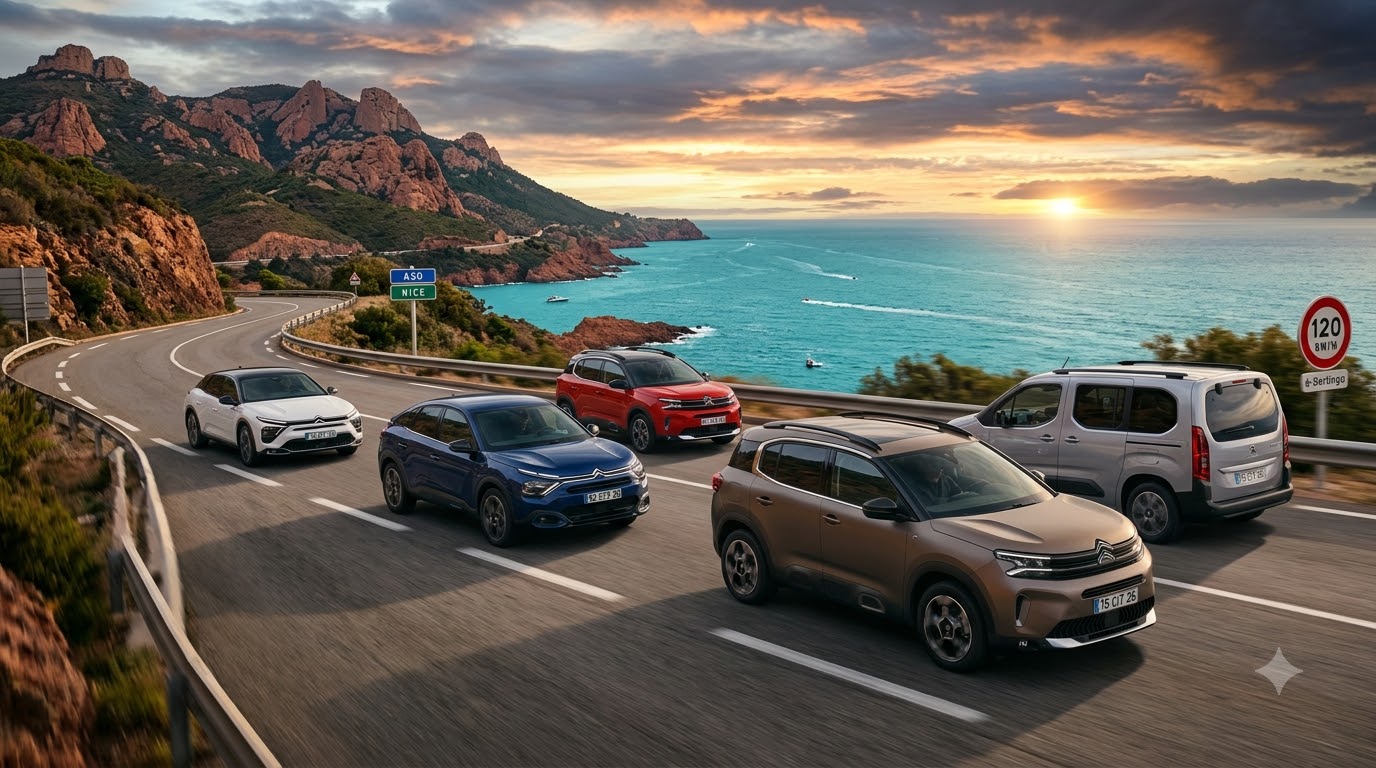
Citroen establishes a firm foothold in the Indian mass market with its localized C-Cubed program, offering quirky, comfort-focused SUVs and EVs.
Premium Mainstream Transition
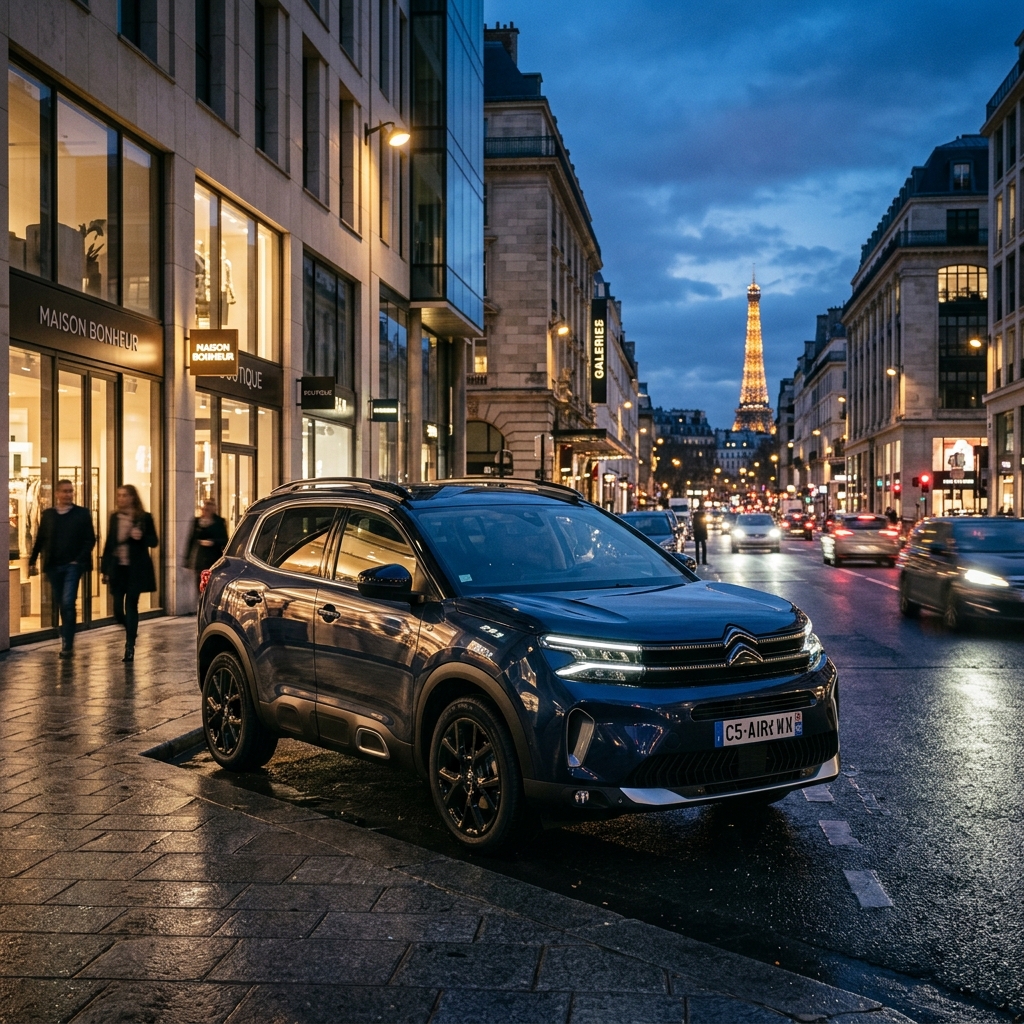
Citroen is anticipated to introduce larger, more premium models to India, including advanced localized EVs leveraging Stellantis global platforms.
Post-War Icons: The 2CV and the Goddess
Following World War II, under Michelin's stewardship, Citroën produced two vehicles that would define French motoring for generations.
The first was the 2CV (Deux Chevaux), launched in 1948. Designed to motorize French farmers who were still using horses and carts, the design brief was legendary: it had to carry four people and 50 kilograms of farm goods at 50 km/h, and its suspension had to be soft enough to carry a basket of eggs across a plowed field without breaking one. The 2CV was minimalist, mechanically rudimentary, but brilliantly engineered. It became a symbol of French utilitarianism, remaining in production for over four decades.
Then, in 1955, Citroën shocked the world with the DS (pronounced Déesse, French for Goddess). If the 2CV was a tractor, the DS was a spaceship. Its aerodynamic teardrop shape looked like nothing else. But its true magic lay underneath: a hydropneumatic suspension system that powered the suspension, brakes, steering, and clutch. The DS glided over rough roads like a magic carpet, offering ride quality that Rolls-Royce couldn't match. It remains one of the most significant and beautiful cars in automotive history.
The Modern Era: Serenity and Electrification
The brand’s insistence on unique, complex engineering frequently led to financial instability, eventually resulting in a merger with Peugeot in 1976 to form the PSA Group. For a time, Citroën vehicles became more conventional, sharing platforms with Peugeot. However, in the modern era, particularly as part of the massive Stellantis conglomerate formed in 2021, Citroën has joyfully rediscovered its distinct identity.
Today, Citroën’s philosophy is built entirely around comfort and well-being. The brand recognizes that in a stressful, fast-paced world, a car should be a sanctuary. Through its "Citroën Advanced Comfort" program, vehicles utilize specialized progressive hydraulic cushion suspensions and memory-foam seating to recreate the legendary "magic carpet" ride of the DS, tailored for the modern driver.
The all-electric Citroën Ami, a bold reimagining of urban micro-mobility.
Democratizing the Electric Future
As the world pivots to electric mobility, Citroën is leveraging its heritage of accessibility to ensure that the EV transition is not just for the wealthy.
The most striking example of this is the Citroën Ami. Launched in 2020, the Ami is an ultra-compact electric quadricycle. It is wonderfully bizarre, perfectly symmetrical (the front and rear body panels are identical to save costs), and designed purely for dense urban environments. It is so accessible that in many European countries, it can be driven by teenagers without a full driver's license.
Beyond micro-mobility, Citroën is rolling out serious EV volume drivers. The brand has introduced full electric versions of its core models, such as the ë-C4 and the new ë-C3. The ë-C3, in particular, is a crucial vehicle, designed to be one of the most affordable full-size electric hatchbacks in Europe, fighting back against the wave of low-cost imported EVs.
Citroën's journey is a testament to the belief that practicality does not have to be boring. By combining daring design, a relentless pursuit of comfort, and a commitment to accessible electrification, Citroën ensures that the French avant-garde spirit will continue to cruise silently and smoothly into the future.