With fuel prices remaining unpredictable and urban traffic congestion reaching unprecedented levels, fuel efficiency is no longer just a technical specification on a brochure—it is the single most critical factor determining your monthly cost of car ownership. However, navigating manufacturer mileage claims requires looking beyond glossy laboratory figures and understanding real-world driving physics on Indian roads.
What We Love: Why Modern Fuel-Efficient Cars Excel
Today's highest-mileage vehicles are engineering wonders that achieve record-breaking frugality without the sluggishness of older economy cars:
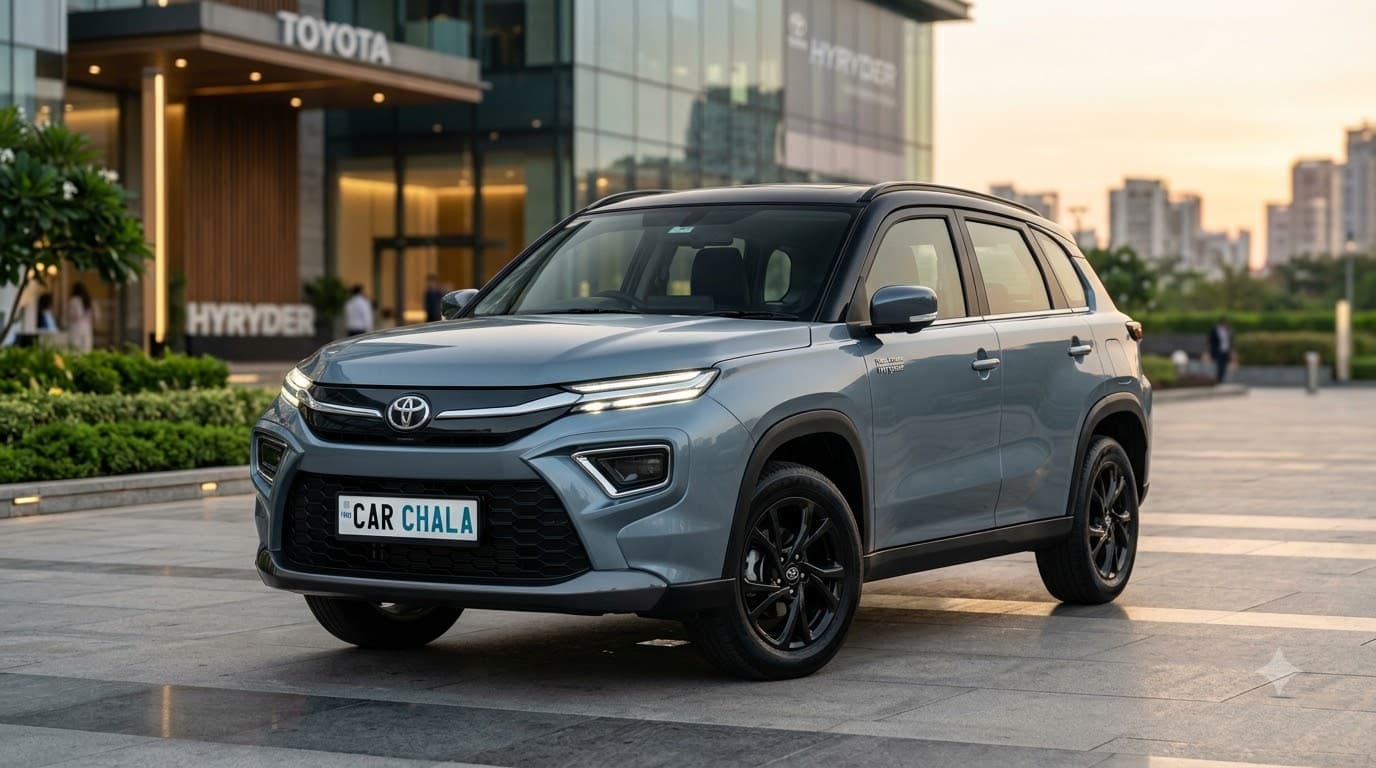
- Velvety Urban EV Creep: Strong Hybrids (like the Grand Vitara and Hyryder) run 50% to 60% of city commutes with the petrol engine completely switched off, delivering silent electric driving and 22-25 kmpl in bumper-to-bumper gridlock.
- Next-Gen Thermal Efficiency: Modern 3-cylinder and 4-cylinder naturally aspirated engines (such as Suzuki's Z12E and K10C) utilize high 13.9:1 compression ratios, dual injectors, and cooled EGR to deliver 24+ kmpl on standard petrol.
- Sub-₹2.50 Running Costs with CNG: Modern dual-cylinder factory CNG setups provide scooter-rivalling operational costs while retaining usable boot luggage space and factory warranties.
- Massive 1,000+ km Range: Cars equipped with strong hybrid powertrains can travel from Delhi to Mumbai or Bengaluru to Goa on just a single tank of fuel, eliminating range anxiety.
What to Consider: Key Trade-offs Before Buying
While maximizing fuel economy cuts recurring costs, buyers must weigh several trade-offs before signing the cheque:
- Upfront Hybrid Price Premium: Strong Hybrid powertrains cost ₹2.5 to ₹3.0 Lakh more than equivalent mild-hybrid or standard petrol variants, requiring 60,000 to 70,000 km of driving to break even.
- Battery Packaging & Boot Compromises: In sedans and midsize SUVs, the lithium-ion traction battery is mounted in the trunk floor, reducing cargo volume by 20% to 35% compared to non-hybrid versions.
- CNG Refueling Queues: High-efficiency CNG cars save money but demand patience during peak-hour filling queues and require mandatory 3-year cylinder hydrostatic testing.
- Highway Aerodynamic Drag: Tall-boy hatchbacks like the Wagon R achieve stellar city mileage but experience increased drag above 90 km/h, reducing open expressway efficiency.
1. Understanding Real-World Mileage vs. ARAI / MID Claims
Every new car sold in India carries an official fuel efficiency figure certified by the Automotive Research Association of India (ARAI) or ICAT under the Modified Indian Driving Cycle (MIDC). These tests are conducted on controlled chassis dynamometers with moderate accelerations, zero wind resistance, no payload, and crucially, with the air conditioning completely turned off.
In real-world Indian conditions—characterized by stop-and-go bottleneck traffic, intense summer temperatures demanding maximum air conditioning load, uneven road surfaces, and varying passenger weights—you should anticipate a 15% to 25% drop from certified ARAI numbers for conventional petrol cars. However, Strong Hybrids defy this trend in city driving by leveraging electric motors and regenerative braking precisely where traditional combustion engines are at their least efficient.
2. Powertrain Comparison: Strong Hybrid vs. Mild Hybrid vs. CNG vs. Modern Petrol
Understanding the fundamental engineering differences between current fuel-saving technologies will help you choose the right car for your usage profile:
- Strong Hybrids (SHEV): Feature a high-voltage lithium-ion battery and electric motor paired with an efficient Atkinson-cycle petrol engine (e.g., Grand Vitara, Hyryder). In urban traffic, the car can drive 50% to 60% of the time in pure EV mode with the petrol engine shut off. Real-world city mileage frequently reaches an incredible 22 to 25 kmpl.
- Mild Hybrids (MHEV / Smart Hybrid): Use a compact 12V or 48V auxiliary battery with an Integrated Starter Generator (ISG). They provide brief torque assistance during acceleration and enable smooth idle start-stop, yielding a modest 5% to 8% efficiency improvement over standard petrol engines.
- Factory-Fitted CNG (S-CNG / iCNG): Delivers the lowest running cost per kilometer in India (around ₹2.20 to ₹2.80 per km). Modern factory kits feature dual-cylinder technology that preserves luggage space and integrated ECUs that prevent backfires. However, CNG vehicles require regular refueling queues and sacrifice low-end pulling torque compared to petrol.
- Next-Gen DualJet & Z-Series Petrols: Modern naturally aspirated engines utilize dual injectors per cylinder, electric water pumps, cooled EGR (Exhaust Gas Recirculation), and ultra-high compression ratios (13.9:1) to squeeze 20+ kmpl real-world mileage without the cost and complexity of hybrid batteries.
3. City vs. Highway Mileage Dynamics: The Inversion Effect
One of the most fascinating aspects of modern automotive efficiency is how different powertrains behave in urban environments versus high-speed expressways:
- In Congested City Traffic: Conventional petrol and diesel cars suffer heavy fuel penalties because idling, starting from standstill, and low-gear crawling waste tremendous thermal energy. Strong Hybrids, conversely, excel in cities because stop-and-go braking continuously recharges the battery, allowing silent, zero-fuel electric creeping.
- On Open 100+ km/h Expressways: The dynamic flips. Aerodynamic drag increases with the square of vehicle speed. Sleek sedans like the Dzire and lightweight hatchbacks slice through the air with minimal resistance, returning 22 to 26 kmpl at constant 80-90 km/h cruising. Strong Hybrids rely more on their petrol engine at high speeds, leveling off around 20 to 22 kmpl.
4. Proven Hypermiling & Fuel-Saving Driving Techniques
Regardless of what vehicle you drive, adopting disciplined driving habits can easily boost your fuel economy by 15% to 20% without slowing your overall commute time:
- Master Progressive Throttle Modulation: Avoid aggressive stomp-and-release pedal inputs. Accelerate smoothly, allowing automatic transmissions to upshift early into higher, more economical gears around 1,800 to 2,200 RPM.
- Anticipate Traffic Flow & Coast: Look three to four vehicles ahead. If a traffic light turns red 200 meters away, lift off the accelerator immediately and let the car coast in gear. In fuel-injected and hybrid cars, lifting off cuts fuel flow to zero and engages regenerative charging.
- Maintain Precise Cold Tire Pressure: Underinflated tires increase rolling resistance exponentially. Driving on tires that are just 4-5 PSI below manufacturer recommendations will decrease fuel efficiency by 3% to 5% and cause rapid shoulder tread wear. Check tire pressure every two weeks in the morning when the rubber is cold.
- Optimize Air Conditioning Usage: Running the AC compressor at maximum blast on short trips can reduce fuel efficiency by up to 10-12% on small-displacement engines. Pre-ventilate hot cabins by rolling down windows for the first 60 seconds of driving before switching on the AC, and set automatic climate control to a comfortable 24°C rather than freezing 18°C.
- Eliminate Unnecessary Dead Weight & Roof Racks: Carrying 50 kg of unnecessary luggage in the boot burns roughly 2% more fuel in urban stop-and-go driving. Bulky aftermarket roof luggage carriers create massive aerodynamic drag at highway speeds, destroying fuel efficiency by up to 15%.
5. Total Cost of Ownership (TCO) & Breakeven Calculation
When shopping for high-mileage cars, never evaluate the sticker price in isolation. Calculate your Breakeven Distance. If a Strong Hybrid variant costs ₹2.5 Lakh more than a conventional petrol model but saves ₹3.50 per kilometer in running costs, you will break even after driving approximately 70,000 kilometers. If you clock 1,500+ km per month, the hybrid will pay for its premium within 3.5 to 4 years, after which every kilometer driven translates to pure monthly savings.