⛰️ Conquer Potholes, Ruts & Broken Roads

Best Cars for Bad Roads in India (2026)

Monsoon-ravaged tarmac, unscientific speed breakers, cratered potholes, and unpaved rural trails demand serious hardware. From rugged ladder-frame titans to high-clearance monocoques with advanced long-travel suspensions, here are the 10 best cars in India engineered to conquer punishing road conditions with supreme confidence.

Quick Comparison

ModelEx-Showroom PriceClaimed MileageKey USP
Mahindra Mahindra Scorpio-N₹13.6 - 20.4 Lakh15.4 kmplRugged 3rd-gen ladder chassis with Penta-link rear suspension, Watt's linkage, and 4XPLOR 4WD with mechanical locking differential.
Mahindra Mahindra Thar₹11.25 - 16.31 Lakh15.2 kmplPurpose-built 4x4 icon boasting 226mm ground clearance, 650mm water wading, and unbeatable off-road approach/departure geometry.
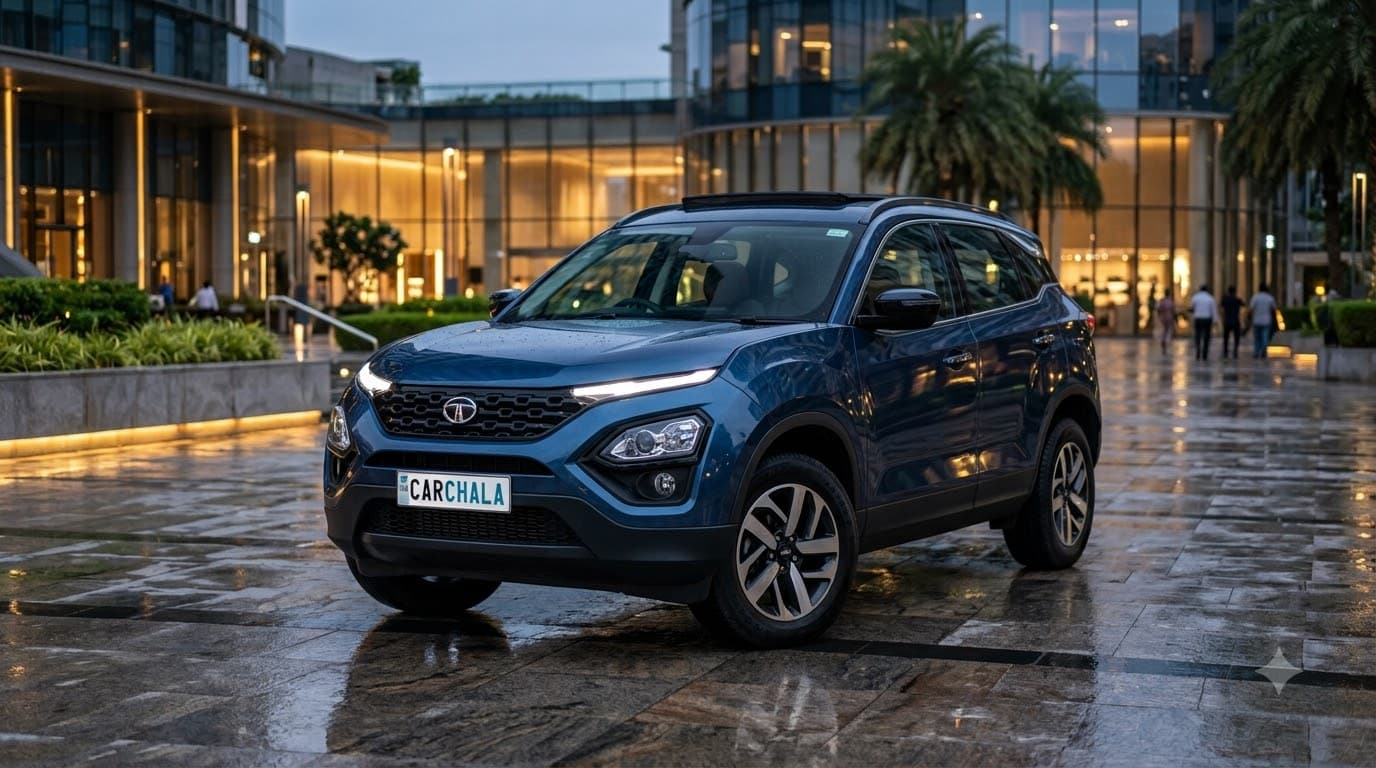
Tata Tata Nexon₹8 - 16.99 Lakh17.0 kmplSegment-leading 208mm ground clearance, heavy-duty dual-path suspension struts, and 5-star Bharat NCAP crash safety.
Maruti Suzuki Maruti Suzuki Jimny₹12.74 - 18.47 Lakh16.94 kmplFeatherweight 1,200kg ladder-chassis 4x4 with front and rear 3-link rigid live axles and ALLGRIP PRO low-range transfer case.
Tata Tata Harrier₹15.4 - 23.1 Lakh16.8 kmplLand Rover D8-derived OMEGArc chassis with 205mm ground clearance, ESP rough-road modes, and exceptional high-speed absorption.

Top Cars for Bad Roads Evaluated

Mahindra Mahindra Scorpio-N in Best Cars for Bad Roads in India 2026
4.8 / 5

Mahindra Mahindra Scorpio-N

Est. On-Road Starts At: ₹16.50 - ₹29.80 Lakh

Ex-Showroom

₹13.6 - 20.4 Lakh

Mileage

15.4 kmpl

Engine

1.2L Turbo / 1.5L Diesel

Safety

What we love

  • Penta-link rear suspension with Watt's linkage eliminates traditional ladder-frame lateral body wag over deep ruts
  • Frequency Dependent Damping (FDD) shocks automatically soften over sharp high-frequency corrugations and potholes
  • True 4XPLOR shift-on-the-fly 4WD with mechanical rear locking differential (MLD) and dedicated off-road terrain modes
  • Massive 187mm laden (200mm+ unladen) ground clearance paired with heavy factory steel underbody bash plates

What to consider

  • Noticeable vertical body motion over wavy city pavement at low speeds compared to monocoque crossovers
  • Tall step-in height demands side footboards for comfortable ingress by elderly family members

Verdict: The Mahindra Scorpio-N is the gold standard for navigating broken Indian roads without breaking a sweat. By combining bulletproof ladder-frame durability with sophisticated Watt's linkage rear suspension and Frequency Dependent Damping, it irons out cratered state highways, rocky mountain climbs, and monsoon slush with peerless composure.
Mahindra Mahindra Thar in Best Cars for Bad Roads in India 2026
4.7 / 5

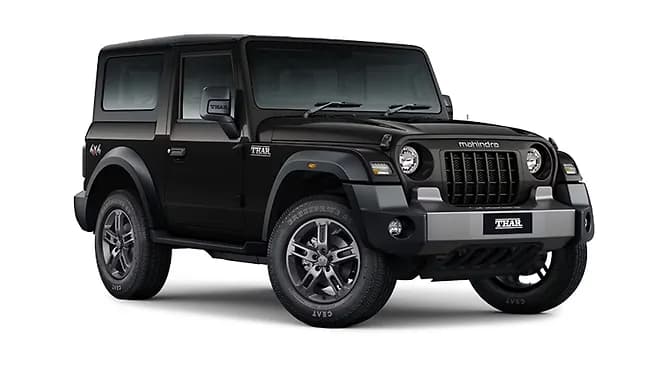
Mahindra Mahindra Thar

Est. On-Road Starts At: ₹13.80 - ₹21.50 Lakh

Ex-Showroom

₹11.25 - 16.31 Lakh

Mileage

15.2 kmpl

Engine

1.5L turbocharged

Safety

What we love

  • Benchmark off-road geometry: 41.8° approach, 36.8° departure, and 27° ramp-over angles clear huge obstacles effortlessly
  • Heavy-duty mechanical 4x4 transfer case with 2.48:1 low-range crawl ratio and Eaton automatic mechanical locking rear differential
  • Towering 226mm ground clearance and 650mm water-wading depth dismiss flash floods and boulder trails with ease
  • High-profile 255/65 R18 all-terrain rubber provides massive sidewall cushioning against rim-bending pothole impacts

What to consider

  • Firm, jittery ride quality on broken urban tarmac with pronounced side-to-side passenger head toss
  • Cramped 4-seater cabin with negligible boot space limits utility as a primary family vehicle

Verdict: When road surfaces cease to exist, the Mahindra Thar is in its absolute element. Built on an indestructible ladder chassis with true mechanical 4x4 low-range, class-dominating 226mm clearance, and massive all-terrain tyres, it turns boulder-strewn Himalayan passes and waterlogged rural trenches into a casual Sunday drive.

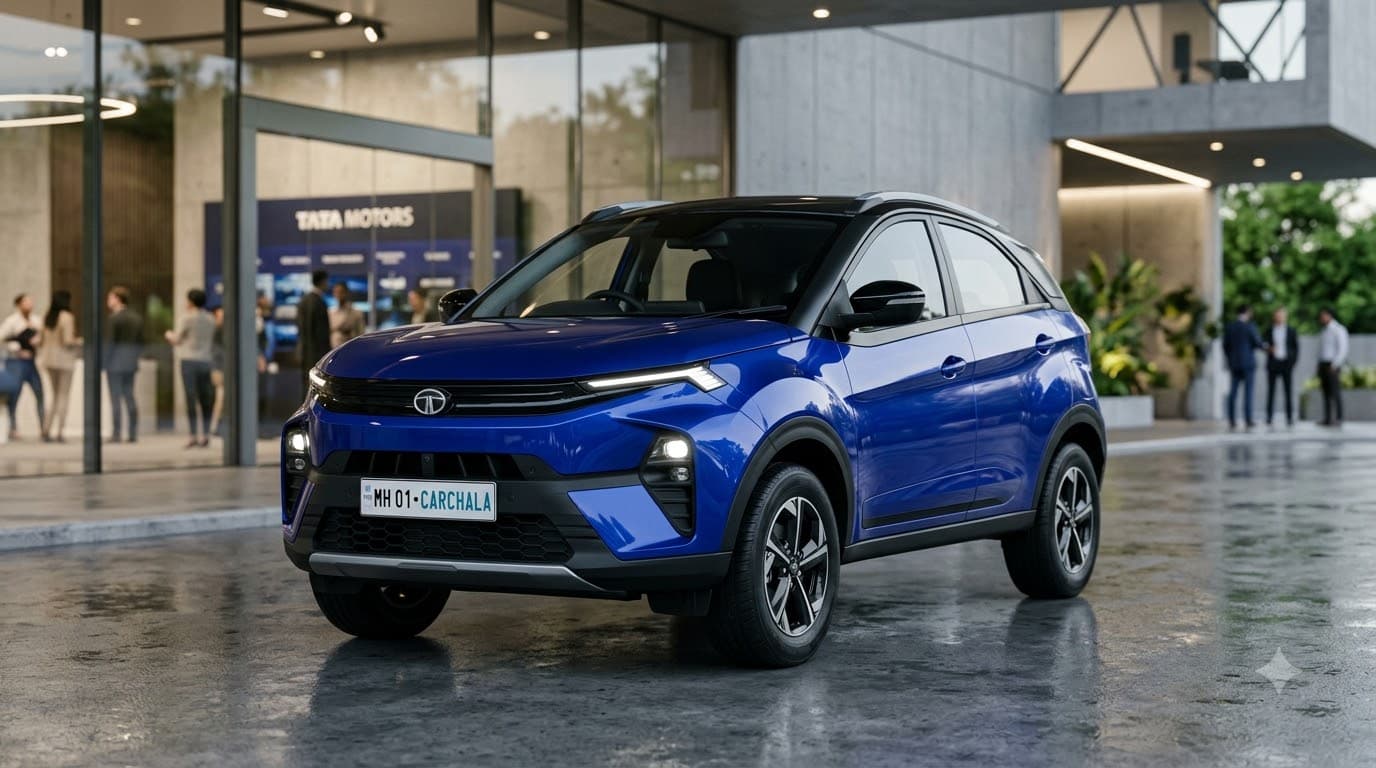
Tata Tata Nexon in Best Cars for Bad Roads in India 2026
4.6 / 5

Tata Tata Nexon

Est. On-Road Starts At: ₹9.20 - ₹18.40 Lakh

Ex-Showroom

₹8 - 16.99 Lakh

Mileage

17.0 kmpl

Engine

1.2L Turbo / 1.5L Diesel

Safety

What we love

  • Class-dominating 208mm unladen ground clearance easily clears monstrous unscientific speed breakers and deep craters
  • Dual-path front strut suspension absorbs high-impact potholes without transmitting shockwaves to the steering rack
  • Generous 215/60 R16 high-profile tyre sidewalls cushion against sharp stone edges and wheel rim pinch flats
  • Reinforced high-strength steel crash structure backed by standard 6 airbags and 5-star Bharat NCAP safety rating

What to consider

  • 6-speed AMT automatic gearbox exhibits noticeable shift lag during urgent low-speed rough road maneuvers
  • Low-speed ride exhibits a slightly stiff edge over repetitive sharp expansion joints

Verdict: With an extraordinary 208mm of ground clearance and heavy-duty dual-path suspension damping, the Tata Nexon glides over rough Indian tarmac with the confidence of a full-size SUV. It is the premier compact crossover for buyers demanding maximum pothole immunity, robust build quality, and 5-star safety on a budget.

Maruti Suzuki Maruti Suzuki Jimny in Best Cars for Bad Roads in India 2026
4.6 / 5

Maruti Suzuki Maruti Suzuki Jimny

Est. On-Road Starts At: ₹14.50 - ₹17.90 Lakh

Ex-Showroom

₹12.74 - 18.47 Lakh

Mileage

16.94 kmpl

Engine

1.5L turbocharged

Safety

Not Rated

What we love

  • Authentic 3-link rigid live axle suspension at both front and rear delivers immense wheel articulation over deep ditches
  • Featherweight curb weight allows it to skim over soft sand, deep mud, and slush where heavier SUVs sink and bog down
  • Standard ALLGRIP PRO 4WD system with shift-on-the-fly 4L low-range gearing and brake limited slip differential (B-LSD)
  • Compact 3,985mm length and narrow track make it exceptionally nimble through tight boulder tracks and narrow village lanes

What to consider

  • 1.5L K15B naturally aspirated petrol engine (105 PS / 134 Nm) feels underpowered on fast highway overtaking maneuvers
  • Modest 208-litre boot space requires packing light for extended cross-country expeditions

Verdict: The Maruti Suzuki Jimny is a purist's rough-road machine, pairing front and rear live rigid axles with a lightweight ladder-frame chassis. While larger SUVs rely on brute power, the Jimny uses superior articulation, lightweight agility, and mechanical ALLGRIP PRO 4x4 to conquer terrible trails and rocky terrain with astonishing ease.

Tata Tata Harrier in Best Cars for Bad Roads in India 2026
4.6 / 5

Tata Tata Harrier

Est. On-Road Starts At: ₹18.20 - ₹31.20 Lakh

Ex-Showroom

₹15.4 - 23.1 Lakh

Mileage

16.8 kmpl

Engine

1.2L Turbo / 1.5L Diesel

Safety

What we love

  • Land Rover pedigree OMEGArc monocoque delivers phenomenal torsional stiffness and structural durability over cratered tarmac
  • High 205mm ground clearance and long-travel suspension absorb deep potholes without bottoming out against bump stops
  • Dedicated ESP Terrain Response Modes (Rough, Wet, Normal) optimize electronic traction control over loose gravel and slush
  • Torquey 2.0L Kryotec diesel (350 Nm) delivers effortless cruising power across rough interstate highways

What to consider

  • Lacks a mechanical All-Wheel Drive (AWD) option, limiting deep mud and snow recovery capability
  • Top Fearless trims feature 19-inch wheels with lower profile rubber, slightly reducing low-speed sharp edge compliance

Verdict: Built upon the legendary Land Rover D8 architecture, the Tata Harrier feels like an unstoppable fortress over broken Indian highways. Its long-travel suspension, 205mm ground clearance, and ultra-rigid steel shell absorb severe road undulations with a solid, reassuring thud, allowing you to maintain pace when others are forced to crawl.

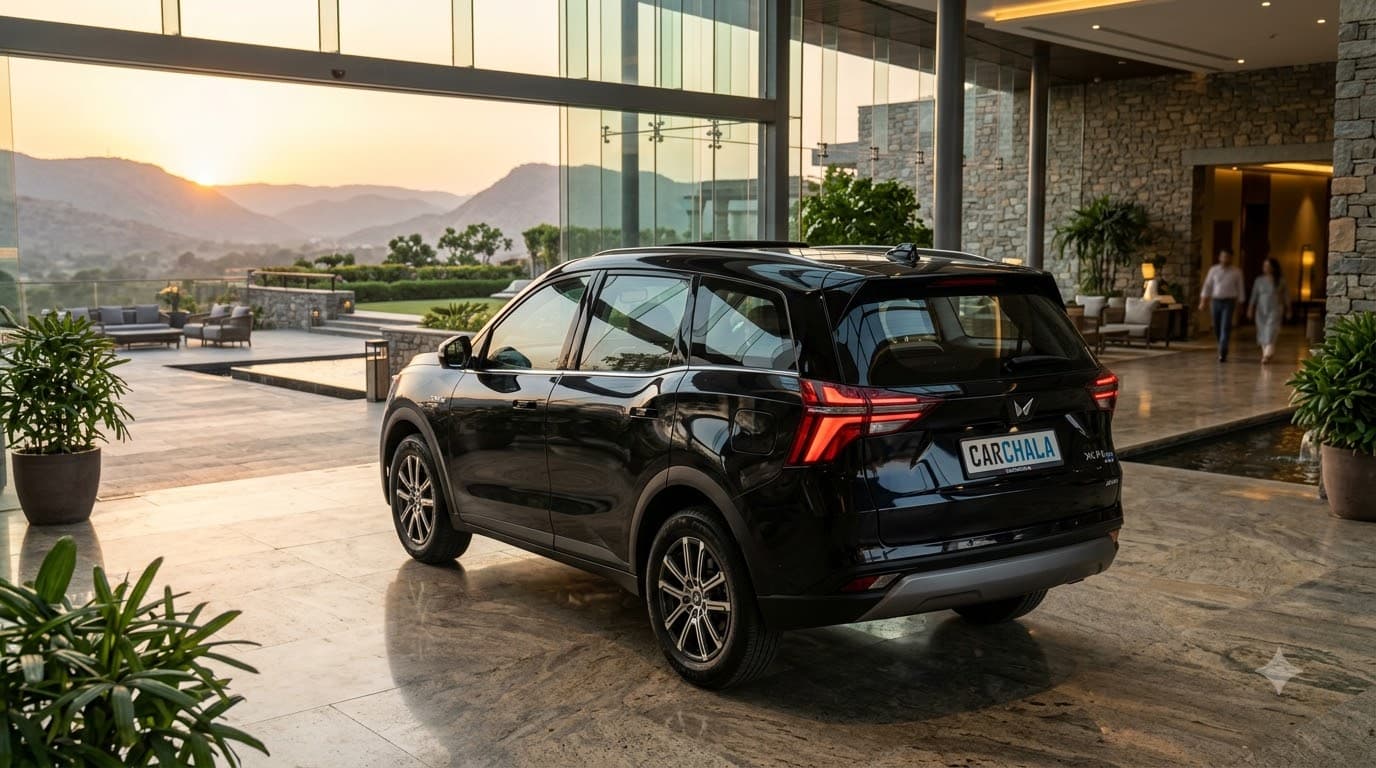
Mahindra Mahindra XUV700 in Best Cars for Bad Roads in India 2026
4.5 / 5

Mahindra Mahindra XUV700

Est. On-Road Starts At: ₹16.50 - ₹31.80 Lakh

Ex-Showroom

₹13.99 - 20.98 Lakh

Mileage

16.5 kmpl

Engine

1.2L Turbo / 1.5L Diesel

Safety

What we love

  • Koni Frequency Selective Damping (FSD) automatically softens damping over high-frequency gravel and stiffens for flat highway cornering
  • Independent multi-link rear suspension keeps all 7 occupants stable with minimal side-to-side passenger toss over uneven patches
  • Available BorgWarner intelligent on-demand AWD seamlessly directs torque to rear wheels within milliseconds of slip detection
  • High 200mm unladen ground clearance provides ample buffer over unpaved bypasses and deep monsoon depressions

What to consider

  • Front bumper air dam sits slightly low, requiring caution when negotiating steep ditch entry angles
  • Potent 200 PS mStallion turbo-petrol variant incurs heavy fuel consumption during prolonged rough-road crawling

Verdict: The Mahindra XUV700 proves that rough-road mastery does not require sacrificing executive luxury. Its Frequency Selective Damping suspension and independent multi-link rear setup filter out sharp road imperfections better than almost any monocoque family SUV in India, delivering a whisper-quiet, flat ride over broken tarmac.

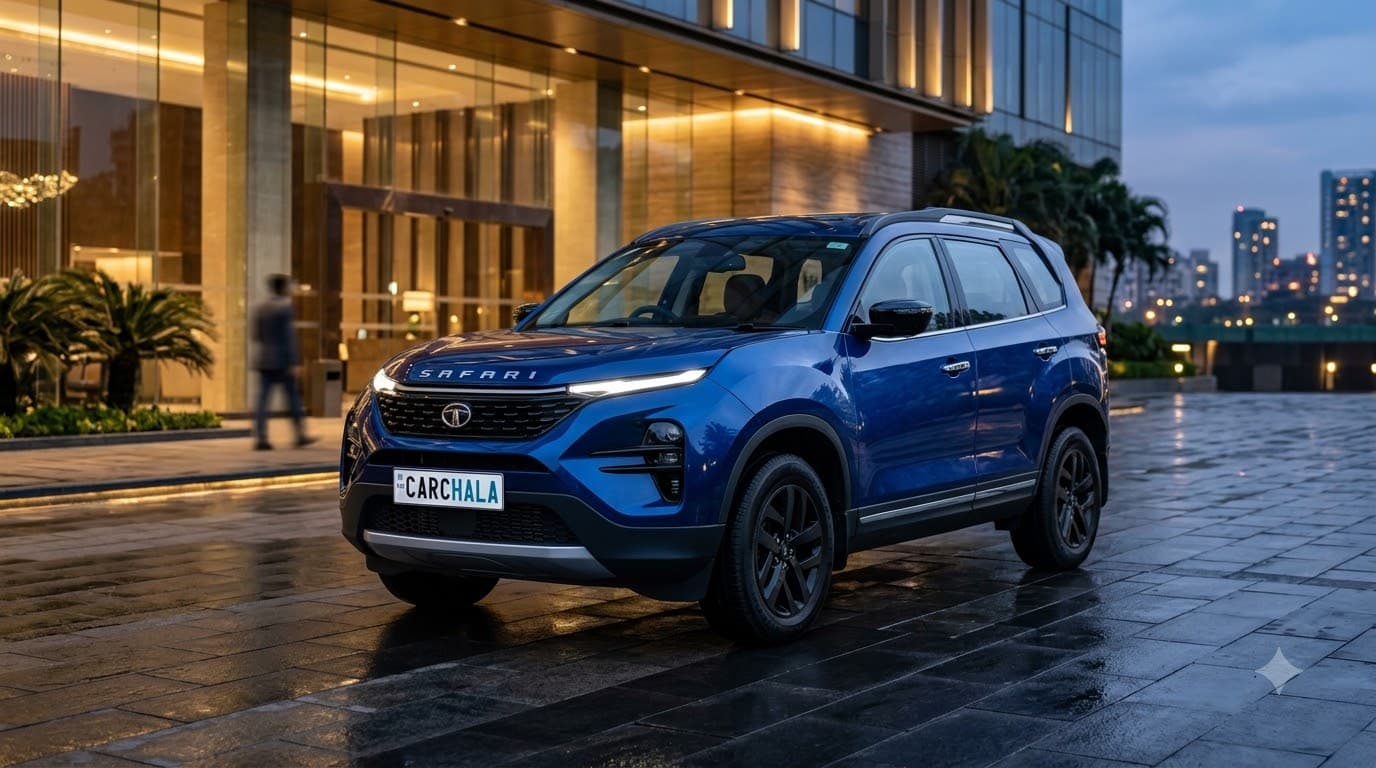
Tata Tata Safari in Best Cars for Bad Roads in India 2026
4.5 / 5

Tata Tata Safari

Est. On-Road Starts At: ₹19.10 - ₹32.60 Lakh

Ex-Showroom

₹16.19 - 24.29 Lakh

Mileage

16.1 kmpl

Engine

1.2L Turbo / 1.5L Diesel

Safety

What we love

  • High-tensile steel OMEGArc platform glides over broken highways with minimal vertical body bounce for middle and third-row passengers
  • Commanding 200mm ground clearance and 450mm water-wading depth conquer heavily flooded monsoon underpasses
  • ESP Terrain Response Modes (Normal, Rough, Wet) provide electronic traction modulation over slippery gravel and slush
  • Heavy-duty suspension dampers flatten severe highway undulations and bridge expansion joints with rock-solid stability

What to consider

  • Long 2,741mm wheelbase requires mindful ramp-over angle management on pointed speed breakers when fully loaded
  • Front-wheel-drive only; lacks mechanical AWD for deep sand or extreme slush recovery

Verdict: The Tata Safari is engineered for large families who refuse to slow down for deteriorating state highways and rutted rural roads. Its Land Rover-derived underpinnings soak up sharp pothole impacts with unflappable composure, ensuring 7-passenger long-distance comfort and 5-star Bharat NCAP crash protection.

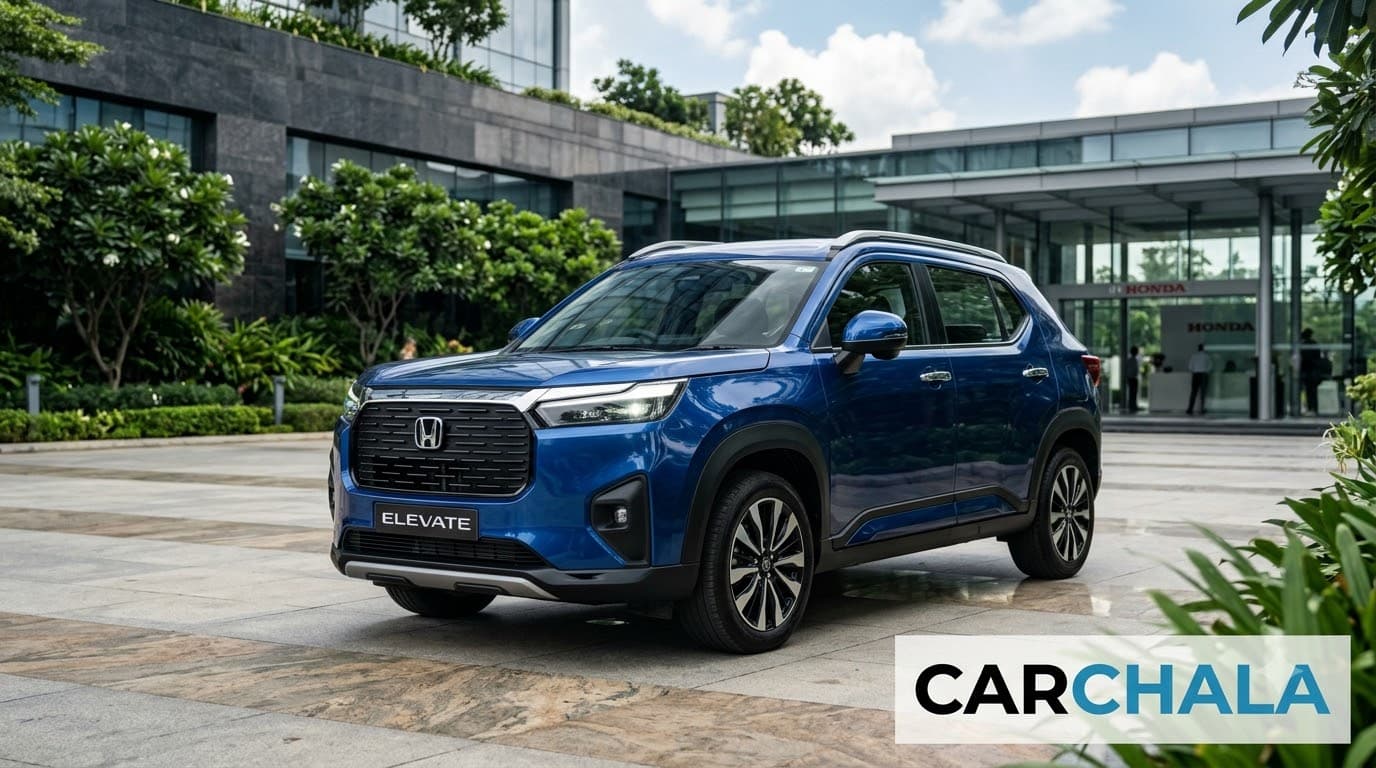
Honda Elevate in Best Cars for Bad Roads in India 2026
4.5 / 5

Honda Elevate

Est. On-Road Starts At: ₹13.60 - ₹19.20 Lakh

Ex-Showroom

₹11.58 Lakh

Mileage

16.92

Engine

Standard Engine

Safety

What we love

  • Segment-topping 220mm unladen ground clearance ensures zero underbody scraping across the most monstrous speed humps
  • Long-travel suspension damping is masterfully calibrated to glide over sharp-edged potholes and broken urban tarmac
  • High-profile 215/55 R17 tyres provide a deep air cushion that protects alloys from structural rim damage
  • High-set SUV seating position with tall glasshouse and flat bonnet line provides superb road and ditch visibility

What to consider

  • 1.5L i-VTEC naturally aspirated petrol engine lacks low-end turbo punch on steep rocky uphill climbs
  • Cabin sound insulation allows noticeable suspension and tyre thrum over coarse, gravelly road surfaces

Verdict: The Honda Elevate is an unexpected rough-road masterclass, boasting a towering 220mm ground clearance that beats every other mid-size SUV in India. Combined with Honda's exceptionally pliant long-stroke suspension, it floats over potholed city streets and rutted country roads with effortless grace.

Mahindra Bolero Neo in Best Cars for Bad Roads in India 2026
4.4 / 5

Mahindra Bolero Neo

Est. On-Road Starts At: ₹11.20 - ₹15.80 Lakh

Ex-Showroom

₹9.95 Lakh

Mileage

17.29

Engine

Standard Engine

Safety

Not Rated

What we love

  • Heavy-duty body-on-frame platform built to endure decades of non-existent rural roads and severe physical punishment
  • Segment-exclusive mechanical locking rear differential (Eaton MLD / Multi-Terrain Tech) on N10(O) pulls through deep mud effortlessly
  • Tough rear-wheel-drive (RWD) layout delivers superior uphill traction on loose gravel, broken inclines, and slush
  • Inexpensive, widely available mechanical spare parts with ultra-affordable rural maintenance costs

What to consider

  • Bumpy, stiff low-speed ride quality on unladen urban tarmac typical of heavy-duty utility vehicles
  • Basic interior cabin plastics and side-facing third-row jump seats lack modern crash protection

Verdict: The Mahindra Bolero Neo is an indestructible workhorse designed for regions where tarmac is a distant luxury. Armed with a heavy-duty ladder frame, rear-wheel drive, and an authentic mechanical locking differential on top trims, it conquers punishing rural trails and boulder-strewn roads that would leave fragile soft-roaders stranded.

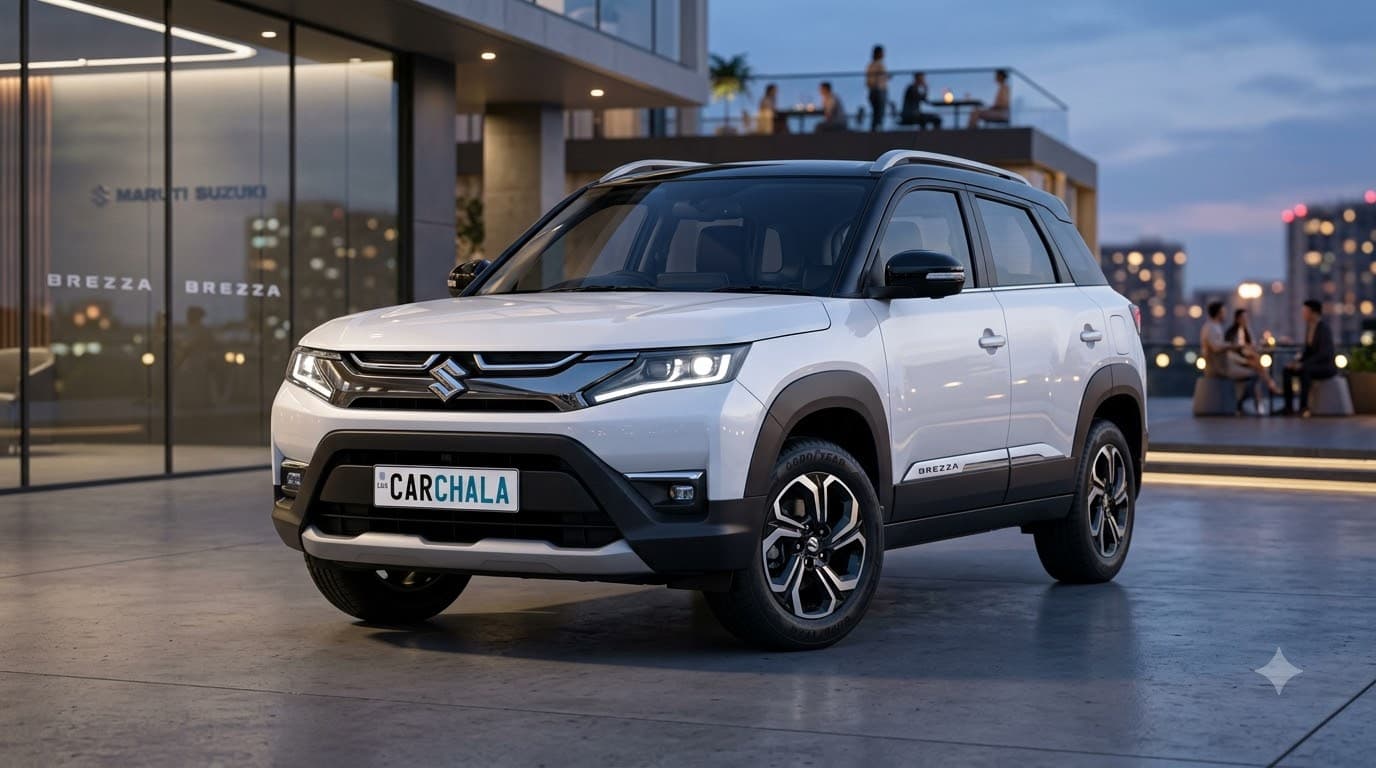
Maruti Suzuki Maruti Suzuki Brezza in Best Cars for Bad Roads in India 2026
4.4 / 5

Maruti Suzuki Maruti Suzuki Brezza

Est. On-Road Starts At: ₹9.50 - ₹16.80 Lakh

Ex-Showroom

₹8.34 - 12.51 Lakh

Mileage

19.8 kmpl

Engine

1.2L Turbo / 1.5L Diesel

Safety

What we love

  • Masterfully calibrated, supple suspension delivers the plushest low-speed pothole absorption in the sub-4m compact SUV class
  • Generous 198mm ground clearance and wide track provide confident rough-road traversal without underbody contact
  • Thick 215/60 R16 tyres provide deep rubber sidewall cushioning with inexpensive, readily available replacement rubber
  • Proven 1.5L K15C 4-cylinder engine and robust chassis deliver stress-free mechanical reliability across nationwide rural networks

What to consider

  • Naturally aspirated 1.5L petrol engine lacks the punchy low-end torque of turbo-diesels on steep rocky inclines
  • No All-Wheel Drive or diesel powertrain option available in the model lineup

Verdict: The Maruti Suzuki Brezza is the undisputed everyday champion of pothole-ridden city streets. Maruti's suspension engineers have perfected the art of low-speed damping for Indian road imperfections, allowing the Brezza to float quietly over broken tarmac while its 198mm clearance and bulletproof mechanicals guarantee total peace of mind.

Slightly Over Budget (But Worth The Stretch)

If you can push your budget a bit further, these cars offer massive upgrades.

Toyota Fortuner in Best Cars for Bad Roads in India 2026
4.1 / 5

Toyota Fortuner

Est. On-Road Starts At: ₹39.97 Lakh

Recommended Stretch

₹51.44 Lakh

Mileage

10.0 kmpl

Engine

1.2L Turbo / 1.5L Diesel

Safety

What we love

  • Ultra-rugged heavy-duty ladder-frame chassis built to withstand decades of non-existent roads and severe mechanical abuse
  • Shift-on-the-fly 4x4 hardware featuring low-range transfer case (4L), rear differential lock, and auto-limited slip differential
  • High-profile 265/60 R18 tyres with massive rubber sidewalls protect alloy wheels against sharp boulder strikes and pinch flats

What to consider

  • Stiff, jiggly low-speed ride quality on broken urban tarmac due to heavy live-axle rear suspension setup
  • Premium price tag crossing ₹55+ Lakh on-road with utilitarian interior switchgear compared to monocoque luxury crossovers

Why stretch for this? If your budget stretches to ₹33.43 - ₹51.44 Lakh Ex-Showroom (₹39.50 - ₹60.00 Lakh On-Road), the Toyota Fortuner provides near-indestructible heavy-duty ladder-frame durability, 225mm ground clearance, 700mm water-wading capacity, and true 4x4 low-range hardware that laughs at non-existent roads for decades.

Hyundai Tucson in Best Cars for Bad Roads in India 2026
4.2 / 5

Hyundai Tucson

Est. On-Road Starts At: ₹33.36 Lakh

Recommended Stretch

₹35.90 Lakh

Mileage

14.5 kmpl

Engine

1.2L Turbo / 1.5L Diesel

Safety

What we love

  • Plush independent multi-link rear suspension isolates passengers completely from high-frequency road vibrations and sharp expansion ridges
  • Intelligent HTRAC All-Wheel Drive with dedicated Multi-Terrain modes (Snow, Mud, Sand) optimizes traction instantly across slippery surfaces
  • Generous 192mm unladen ground clearance with extensive protective underbody cladding

What to consider

  • Low-profile tyres on top 18-inch diamond-cut alloy wheels require caution over sharp, jagged rock edges
  • Front ADAS radar and electronic sensor modules sit low in the bumper, requiring care during aggressive off-road approach angles

Why stretch for this? If your budget stretches to ₹29.00 - ₹35.90 Lakh Ex-Showroom (₹34.50 - ₹41.80 Lakh On-Road), the Hyundai Tucson provides an executive-grade D-segment monocoque with independent multi-link rear suspension and intelligent HTRAC AWD that glides over broken tarmac with limousine-grade poise.

The Definitive Engineering Guide: Cars Built to Conquer Indian Bad Roads (2026)

Indian road conditions present a torture test unlike almost anywhere else in the automotive world. Between monsoon-induced craters, unscientific speed breakers that resemble miniature mountain peaks, washed-out rural bypasses, and sudden tarmac depressions on national expressways, buying a vehicle that merely looks like an SUV is a recipe for expensive mechanical heartbreak. Choosing a vehicle capable of surviving years of rough-road punishment without rattling itself to pieces requires understanding the critical mechanical pillars: ground clearance geometry, suspension damping architecture, chassis structural rigidity, tyre sidewall physics, and underbody protection.

1. Ground Clearance: Unladen vs. Laden & Critical Clearance Geometry

Ground clearance is your vehicle's first line of defense against rough roads, but brochure numbers alone do not tell the whole story:

  • Unladen vs. Laden Ground Clearance: A vehicle advertising 200mm unladen clearance can compress down to 160mm when loaded with five passengers and weekend luggage if its rear suspension springs are softly sprung. Robust vehicles like the Honda Elevate (220mm), Tata Nexon (208mm), Tata Harrier (205mm), and Toyota Fortuner (225mm) employ progressive-rate coil springs that resist excessive bottoming out under heavy payload.
  • Approach, Departure, and Ramp-Over (Breakover) Angles: Clearance is three-dimensional. The Approach Angle dictates whether your front bumper air dam will crack when descending into a deep pothole or ditch. The Ramp-Over Angle determines whether your car will high-center its underbelly on the apex of a sharp, unscientific speed hump. The Departure Angle ensures the rear bumper and exhaust tip don't scrape when climbing out of deep depressions. Purpose-built off-roaders like the Mahindra Thar boast extreme geometry (41.8° approach, 36.8° departure) that render urban road hazards negligible.

2. Suspension Dynamics: Long Travel, Frequency Selective Damping & Multi-Link Setups

Ground clearance stops your underbody from scraping, but suspension engineering determines whether road shock dissipates harmlessly into the chassis or punishes your spine:

  • Long Suspension Travel: Long-travel dampers allow the wheels to articulate deeply into depressions and absorb speed humps without violently slamming into rubber bump stops, safeguarding internal chassis spot welds.
  • Frequency Selective Damping (FSD / FDD): Featured in vehicles like the Mahindra XUV700 and Scorpio-N, this hydraulic valving system automatically varies damping rates based on road input frequency. Over high-frequency rough roads, gravel, and corrugated tracks, the valves open to provide soft, plush impact absorption; during low-frequency high-speed highway cornering, the valves stay closed to eliminate body roll and pitch.
  • Multi-Link & Independent Rear Setups: Budget crossovers use a simple torsion beam rear axle where a bump on one wheel tilts the entire axle. In contrast, premium monocoques like the Hyundai Tucson and Mahindra XUV700 utilize independent multi-link rear setups. Each wheel reacts independently, keeping the cabin level and drastically reducing passenger side-to-side head toss.
  • Watt's Linkage: Found on the Mahindra Scorpio-N's Penta-link live axle rear suspension, a Watt's linkage eliminates lateral sideways axle deflection during severe articulation, getting rid of the notorious 'tail-wag' common to older ladder-frame utility vehicles.
  • Rigid Live Axles: Found on hardcore off-roaders like the Maruti Suzuki Jimny, 3-link rigid axles front and rear maintain constant ground clearance beneath the differential pumpkin and offer immense wheel articulation over deep cross-axle ruts.

3. Body-on-Frame (Ladder Chassis) vs. Monocoque (Unibody)

The core architectural divide for rough terrain comes down to chassis construction:

  • Ladder-Frame (Body-on-Frame — Scorpio-N, Thar, Jimny, Bolero Neo, Fortuner): The powertrain and suspension are bolted directly to a heavy-duty high-strength steel ladder frame, with the passenger body resting on rubber isolation mounts above it. This architecture can endure extreme torsional twisting, boulder impacts, and decades of relentless mechanical abuse without structural fatigue. The trade-off is higher curb weight and a slightly firm, jiggly low-speed ride over small road ripples.
  • Monocoque (Unibody — Nexon, Brezza, Elevate, Harrier, Safari, XUV700, Tucson): The body shell and chassis frame are stamped as a single high-strength steel unit. Modern monocoques built on heavy-duty global architectures (like Tata's Land Rover-derived OMEGArc) offer extraordinary structural stiffness, superior low-speed pothole plushness, lower roll centers, and car-like highway dynamics that effortlessly handle 95% of India's broken roads.

4. Tyre Sidewall Physics: Why Wheel Profile Trumps Rim Size

Many buyers mistakenly upgrade to massive 18-inch or 19-inch alloy wheels with low-profile rubber (e.g., 235/50 R19) for curb appeal. However, on punishing Indian roads, tyre sidewall height is your crucial first line of suspension:

  • A high-profile tyre (e.g., 215/60 R16 on a Brezza/Nexon, 215/55 R17 on an Elevate, or 265/60 R18 on a Fortuner) provides a thick, protective air cushion between the tarmac and the metal wheel. When striking a sharp-edged pothole at speed, the tall rubber sidewall flexes to absorb the kinetic blow, preventing wheel rim cracks, structural buckles, and pinch flats.
  • Low-profile tyres lack sufficient cushioning; violent crater strikes frequently cause sidewall bulges, cracked alloy rims, and bent suspension tie-rods. For broken road conditions, 16-inch and 17-inch wheel setups with generous sidewalls are mathematically the superior choice.

5. Underbody Protection, Water-Wading Capabilities & Insurance Safeguards

Navigating hostile monsoon roads presents severe mechanical hazards that require preventative preparation:

  • Engine Sump & Underbody Armour: Flying gravel and jagged speed breakers can easily puncture an unprotected aluminium oil pan or transmission casing, causing catastrophic engine seizure within minutes. Ensure your vehicle has a robust metal or heavy-duty composite engine guard fitted.
  • Water-Wading Depth: Flash-flooded underpasses are a regular hazard during Indian monsoons. Vehicles like the Toyota Fortuner (700mm), Mahindra Thar (650mm), and Tata Safari (450mm) feature high-mounted engine air intakes to prevent water ingestion into the cylinders.
  • Hydrostatic Lock Insurance Add-on: Standard motor insurance does not cover engine damage resulting from water ingestion (hydrostatic lock). When insuring your vehicle, always include an Engine & Gearbox Protector add-on along with Zero Depreciation coverage to safeguard against multi-lakh repair bills.

Frequently Asked Questions

What is the absolute minimum ground clearance needed for bad roads in India?

For frequently tackling broken tarmac, rural roads, and severe monsoon potholes, you need a minimum unladen ground clearance of 190mm to 200mm. However, if you regularly travel with five passengers and luggage, vehicles with 200mm or higher (such as the Honda Elevate at 220mm, Tata Nexon at 208mm, Tata Harrier at 205mm, or Toyota Fortuner at 225mm) ensure the underbody does not scrape against sharp speed humps or boulders when the suspension springs compress under load.

Which car under ₹10 Lakh has the best suspension for potholes and broken roads?

The Tata Nexon and Maruti Suzuki Brezza are the two top contenders under ₹10 Lakh. The Tata Nexon offers a segment-topping 208mm ground clearance and heavy-duty dual-path suspension that absorbs high-impact craters effortlessly. Meanwhile, the Maruti Suzuki Brezza provides an exceptionally supple, plush low-speed ride that completely rounds off sharp city pothole edges and broken tarmac.

Body-on-Frame (Ladder Chassis) vs. Monocoque: Which is better for rough Indian roads?

It depends on the severity of the terrain. Ladder-Frame SUVs (like the Mahindra Scorpio-N, Thar, Bolero Neo, and Toyota Fortuner) are unmatched for extreme mechanical abuse, rocky rural trails, deep ruts, and unpaved terrain because their heavy steel chassis resists structural deformation indefinitely. Monocoque SUVs (like the Tata Harrier, Mahindra XUV700, and Honda Elevate) are superior for 90% of highway and urban potholes, delivering plush low-speed bump absorption, minimal body roll, and refined car-like comfort.

Why do high-profile tyres perform better on bad roads than low-profile alloys?

A high-profile tyre (such as 60-series or 65-series rubber) provides a tall cushion of compressed air between the road surface and the metal rim. When slamming into a sharp pothole edge, the thick rubber sidewall flexes to dissipate the kinetic impact, protecting the alloy wheel from cracking or bending and preventing sidewall pinch flats. Low-profile tyres on large 18-inch or 19-inch wheels transmit harsh vibrations straight into the cabin and are highly prone to impact damage.

Is All-Wheel Drive (AWD) or 4x4 mandatory for driving on bad roads in India?

No, AWD or 4x4 is not mandatory for standard broken tarmac, potholes, gravel roads, or high speed breakers. A front-wheel-drive (FWD) or rear-wheel-drive (RWD) vehicle with 190mm+ ground clearance and Electronic Stability Control (ESC) with rough-road traction logic can easily conquer 95% of Indian roads. True 4x4 with low-range transfer cases (like the Thar, Scorpio-N 4XPLOR, Jimny, or Fortuner) is only necessary for deep monsoon mud, loose sand, riverbeds, or snowy mountain passes where tyres lose all grip.

Which compact SUV offers the softest, most comfortable suspension for potholes?

The Maruti Suzuki Brezza is widely recognized by automotive journalists for offering the plushest, most compliant low-speed suspension damping in the compact SUV segment. It glides silently over broken city pavement and bridge expansion joints without transferring jarring jolts to passengers. In the mid-size segment, the Honda Elevate and Mahindra XUV700 (with Frequency Selective Damping) offer class-leading rough-road filtering.

What is water-wading depth, and why is it crucial during Indian monsoons?

Water-wading depth is the maximum safe water depth a vehicle can drive through without water entering the engine air intake or electrical modules. During Indian monsoons, waterlogged underpasses regularly accumulate 300mm to 500mm of floodwater. Dedicated off-roaders like the Toyota Fortuner (700mm) and Mahindra Thar (650mm) excel in deep floods, while mainstream family SUVs like the Tata Safari (450mm) handle typical urban flash floods with ease.

How does Frequency Selective Damping (FSD) improve ride comfort on rough surfaces?

Frequency Selective Damping (FSD) employs a special secondary hydraulic bypass valve inside the shock absorber. When the wheels encounter rapid, high-frequency impacts (such as corrugated gravel, ruts, and sharp potholes), the valve opens to soften damping force and soak up harsh vibrations before they reach the cabin. During slow, low-frequency chassis motions (such as high-speed cornering or braking), the valve stays closed to stiffen the suspension, preventing body roll and pitch.

How can I protect my car's underbody from scraping on unscientific speed breakers?

To prevent underbody damage: (1) Approach unusually tall speed breakers diagonally (one front wheel crosses first, followed by the second) to lift the chassis sequentially rather than bottoming out the wheelbase; (2) Install a factory-approved metal or heavy-duty composite engine sump guard to protect the oil pan; (3) Avoid overloading the rear seat and boot beyond manufacturer payload limits; and (4) Maintain recommended tyre air pressures, as underinflated tyres reduce effective ground clearance by 10mm to 15mm.

Which car built for bad roads has the lowest long-term maintenance and repair costs in India?

The Maruti Suzuki Brezza and Mahindra Bolero Neo deliver the lowest rough-road maintenance costs. Their suspension bushes, shock absorbers, control arms, and high-profile tyres are inexpensive and readily available across thousands of authorized service centers and independent workshops nationwide. For larger ladder-frame SUVs, the Toyota Fortuner, while carrying a higher initial purchase price, offers legendary durability with virtually zero unscheduled mechanical failures even after 200,000+ kilometers of severe punishment.