Buyer's Guide: Best CNG Cars in India (2026)
The 2026 CNG Revolution: Why Alternative Fuel is Booming
Compressed Natural Gas (CNG) has transformed from a commercial fleet compromise into a mainstream, feature-rich alternative to expensive petrol and diesel fuels. With petrol prices hovering around ₹95 to ₹105 per liter across major Indian metros, factory-fitted CNG cars offer a lifeline for high-mileage commuters, delivering 50% to 60% savings on recurring fuel bills without sacrificing everyday reliability or comfort.
The Financial Economics: Payback Period & Breakeven Calculation
A factory-fitted CNG vehicle typically carries a price premium of ₹90,000 to ₹1,15,000 over its equivalent petrol manual variant. To assess whether opting for CNG makes financial sense for your household, consider the following real-world cost breakdown:
- Petrol Running Cost: Assuming an average city fuel economy of 14 kmpl at ₹100/liter, running a petrol car costs approximately ₹7.14 per km.
- CNG Running Cost: Delivering an average real-world economy of 26 km/kg at ₹80/kg, a CNG vehicle costs approximately ₹3.07 per km.
- Per Kilometer Savings: You save approximately ₹4.07 per kilometer driven on CNG.
Dividing the ₹1,00,000 upfront premium by the ₹4.07/km saving yields a breakeven distance of ~24,500 km. If you drive 1,000 km to 1,200 km per month, you will fully recover the additional investment within 20 to 24 months. Every kilometer driven beyond that threshold represents pure operational profit in your household budget.
What We Love About Modern Factory-Fitted CNG
- Revolutionary Twin-Cylinder Boot Space: Tata Motors and Hyundai have introduced patented dual-cylinder engineering that splits the gas capacity between two compact tanks placed lower under the luggage floorboard. This preserves 200+ litres of usable trunk space for family vacations.
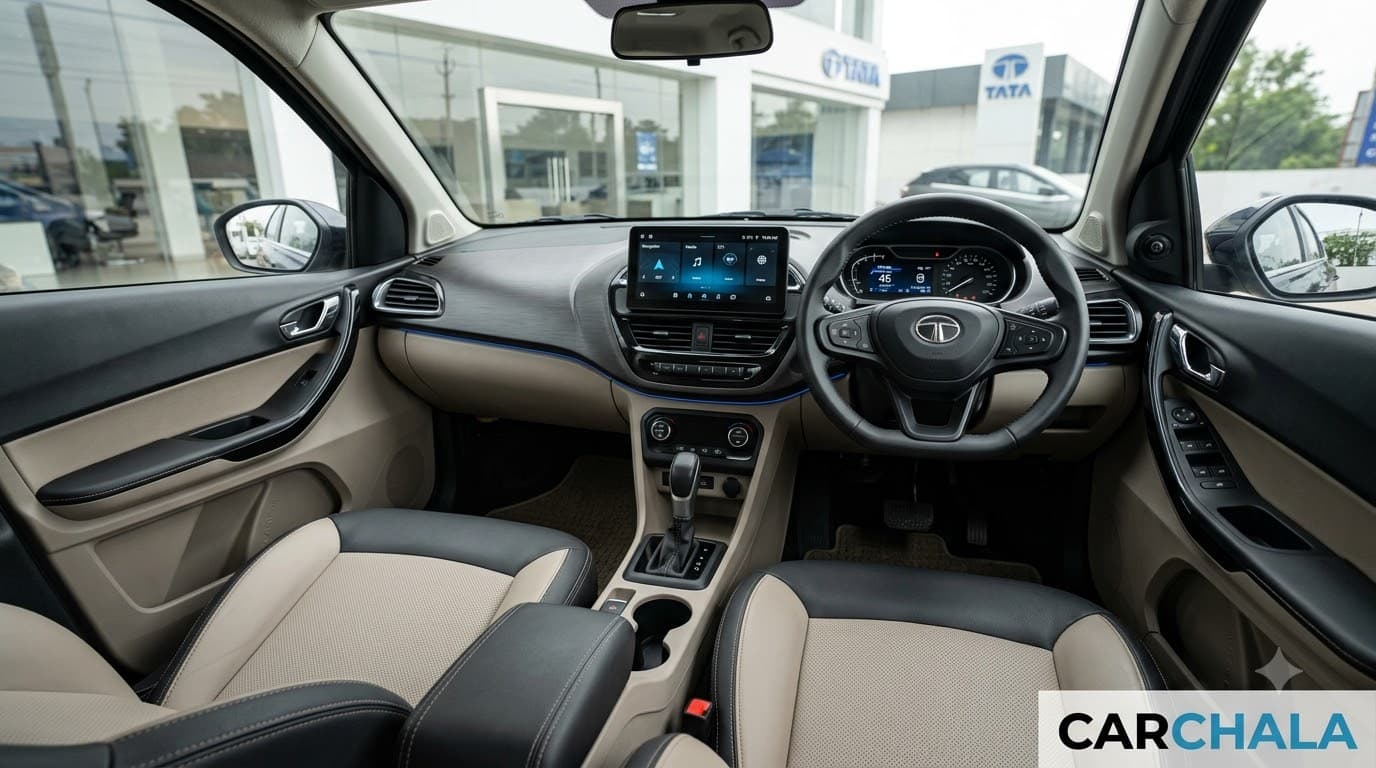
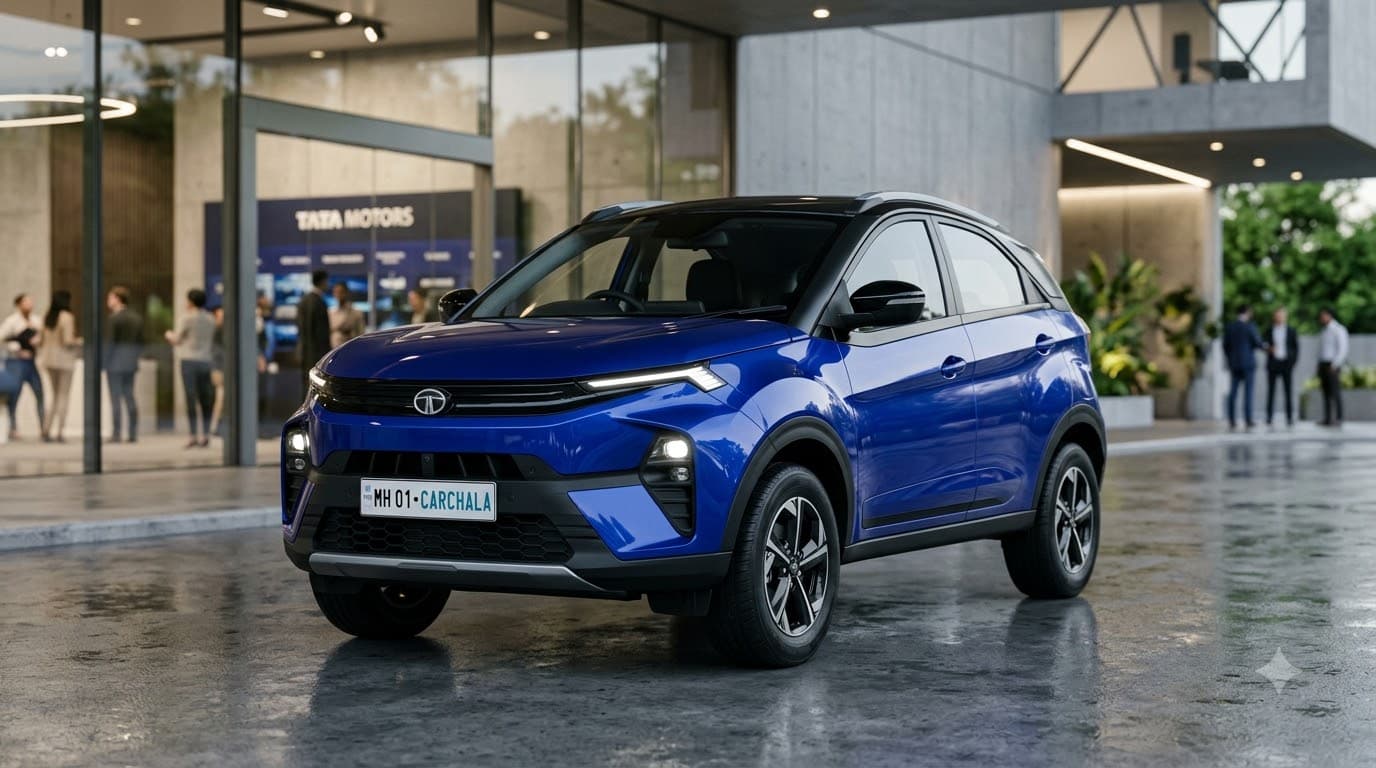
- Clutchless AMT Automatics: With models like the Tata Tiago iCNG and Tigor iCNG AMT, buyers no longer have to suffer through bumper-to-bumper city traffic with a heavy manual clutch.
- Direct CNG Start Capability: Modern intelligent dual-ECU architectures allow cars to start directly on CNG, conserving precious petrol reserves and eliminating cold-start hesitation.
- Integrated Safety Protocols: OEM factory CNG setups feature stainless steel seamless gas pipes, automatic leak detection sensors, and micro-switches that physically prevent engine ignition while the fuel filler flap is open.
What to Consider Before Buying a CNG Car
- Boot Space Intrusion on Single-Tank Models: Traditional single-cylinder configurations (found on most Maruti models) consume almost the entire trunk, requiring smart packing or aftermarket roof luggage carriers.
- 10% to 15% Power and Torque Reduction: Running on CNG results in a mild drop in peak output compared to petrol, meaning downshifting is required during steep hill climbs or rapid high-speed overtakes.
- CNG Filling Station Queues: While the nationwide city gas distribution network is expanding rapidly, peak-hour waiting times at urban CNG pumps can range from 10 to 25 minutes in certain metro clusters.
- Mandatory 3-Year Hydrostatic Cylinder Testing: Under Petroleum and Explosives Safety Organization (PESO) regulations, every CNG cylinder must undergo pressure integrity testing every 36 months to renew its legal compliance plate.
Factory-Fitted OEM vs. Aftermarket Sequential Retrofits
While aftermarket CNG retrofits may appear tempting due to their lower initial cost (₹45,000 to ₹60,000), factory-fitted OEM vehicles are exponentially safer, more reliable, and better engineered:
- Retuned Heavy-Duty Suspensions: Stiffer rear coil springs and recalibrated dampers absorb the 60-80 kg cylinder weight, preventing ground clearance sagging and bottoming out over speed bumps.
- Factory Crash Compliance & Valid Warranties: OEM vehicles undergo full frontal, rear, and side impact crash testing with the gas tank installed, preserving full manufacturer warranty coverage and standard motor insurance validity without claim disputes.