 Market Analysis📷 CarChala Market Intelligence / Auto Punditz Dispatches
Tata Punch EV Crosses 5,000 Monthly Sales in October 2026: First Electric Car in India to Breach Milestone — Detailed Breakdown & Market Impact
In this article
- 1Tata Punch EV: Month-on-Month Sales Trajectory in 2026
- 2Why the Tata Punch EV Shattered Sales Records
- 3India's Top 5 Electric Cars in October 2026: Sales Ranking
- 4The Competitive Dynamic: Punch EV vs. MG Windsor EV
- 5Real-World Ownership Economics: What 5,000 Buyers Discovered
- 6What This Milestone Means for Indian Car Buyers
- 7The Verdict
India's electric mobility revolution achieved a historic landmark in October 2026. For the first time since electric passenger cars debuted on Indian roads, a single EV nameplate has breached the coveted threshold of 5,000 monthly wholesale dispatches. The Tata Punch EV recorded an unprecedented 5,124 units dispatched across dealer networks in October 2026, officially setting an all-time monthly record for any electric vehicle sold in the country.
The milestone, originally highlighted by industry intelligence desk Auto Punditz and corroborated by Vaahan retail registration logs, arrives during a momentous month for the broader Indian automotive sector. In October 2026, total passenger vehicle dispatches across India crossed 5 lakh units for the first time in history. Within that historic festive surge spanning Navratri, Dussehra, and Dhanteras, electric vehicles expanded their overall market penetration to a record 2.85 percent of all new passenger car purchases.
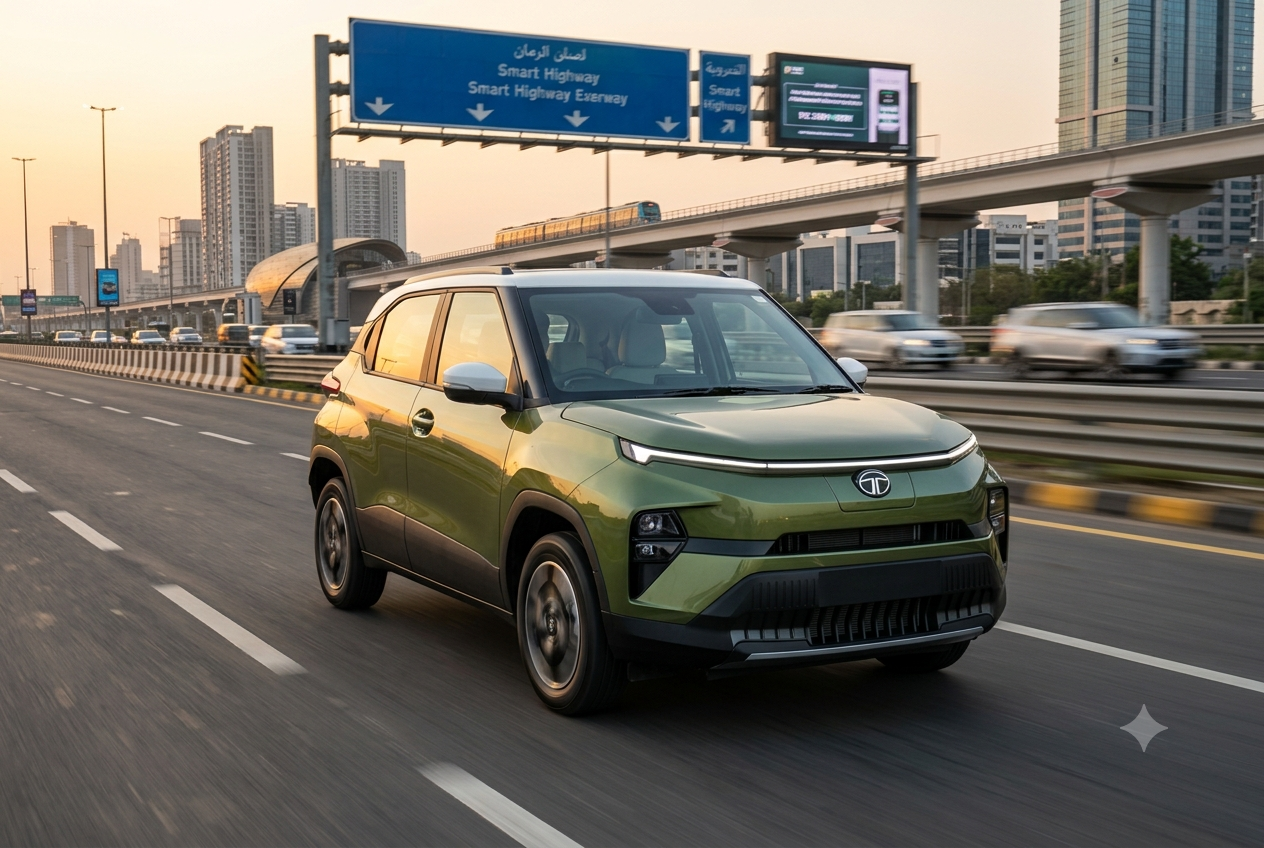
Leading that charge is Tata Motors' purpose-built micro-eSUV. In surpassing 5,000 monthly units, the Punch EV not only outsold every competing electric car in the market by a wide margin, but also outsold several well-established internal combustion engine (ICE) hatchbacks and sedans, demonstrating that electric mobility has firmly entered India's mainstream automotive consciousness.
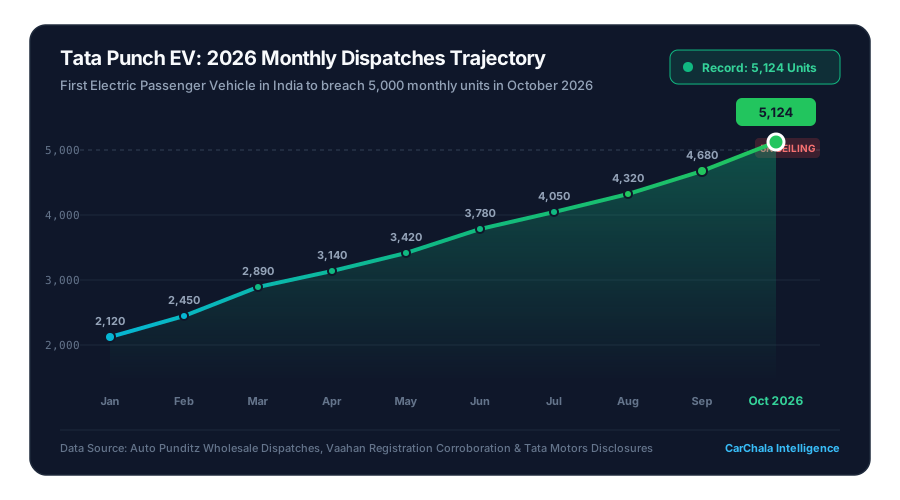
Tata Punch EV: Month-on-Month Sales Trajectory in 2026
To appreciate the scale of this achievement, one must examine how the Punch EV has systematically scaled its monthly dispatch volume across 2026. Built upon Tata's dedicated acti.ev (Advanced Connected Tech-Intelligent Electric Vehicle) platform, the vehicle has demonstrated consistent upward momentum throughout the calendar year:
Month | Wholesale Dispatches | MoM Growth (%) | Key Market Drivers & Festive Milestones |
|---|---|---|---|
| Jan 2026 | 2,120 | Baseline | Post-launch ramp-up; initial customer delivery wave |
| Feb 2026 | 2,450 | +15.56% | Production line stabilization at Sanand manufacturing plant |
| Mar 2026 | 2,890 | +17.95% | Fiscal year-end commercial & private registration push |
| Apr 2026 | 3,140 | +8.65% | First time crossing 3,000 units; expansion to Tier-2 EV retail hubs |
| May 2026 | 3,420 | +8.91% | Introduction of updated software OTA updates and fast-charger network |
| Jun 2026 | 3,780 | +10.52% | Monsoon campaign offers and attractive bank financing tie-ups |
| Jul 2026 | 4,050 | +7.14% | Breach of 4,000 units mark; Bharat NCAP 5-star crash safety impact |
| Aug 2026 | 4,320 | +6.66% | Festive dealer inventory buildup ahead of Onam and Ganesh Chaturthi |
| Sep 2026 | 4,680 | +8.33% | Early festive dispatches for Navratri retail pipeline |
| Oct 2026 | 5,124 | +9.48% | All-time historic high; peak Dussehra and Dhanteras retail delivery |
Data Source: Auto Punditz Wholesale Tracker, Ministry of Road Transport & Highways Vaahan database, and Tata Motors official investor presentations.
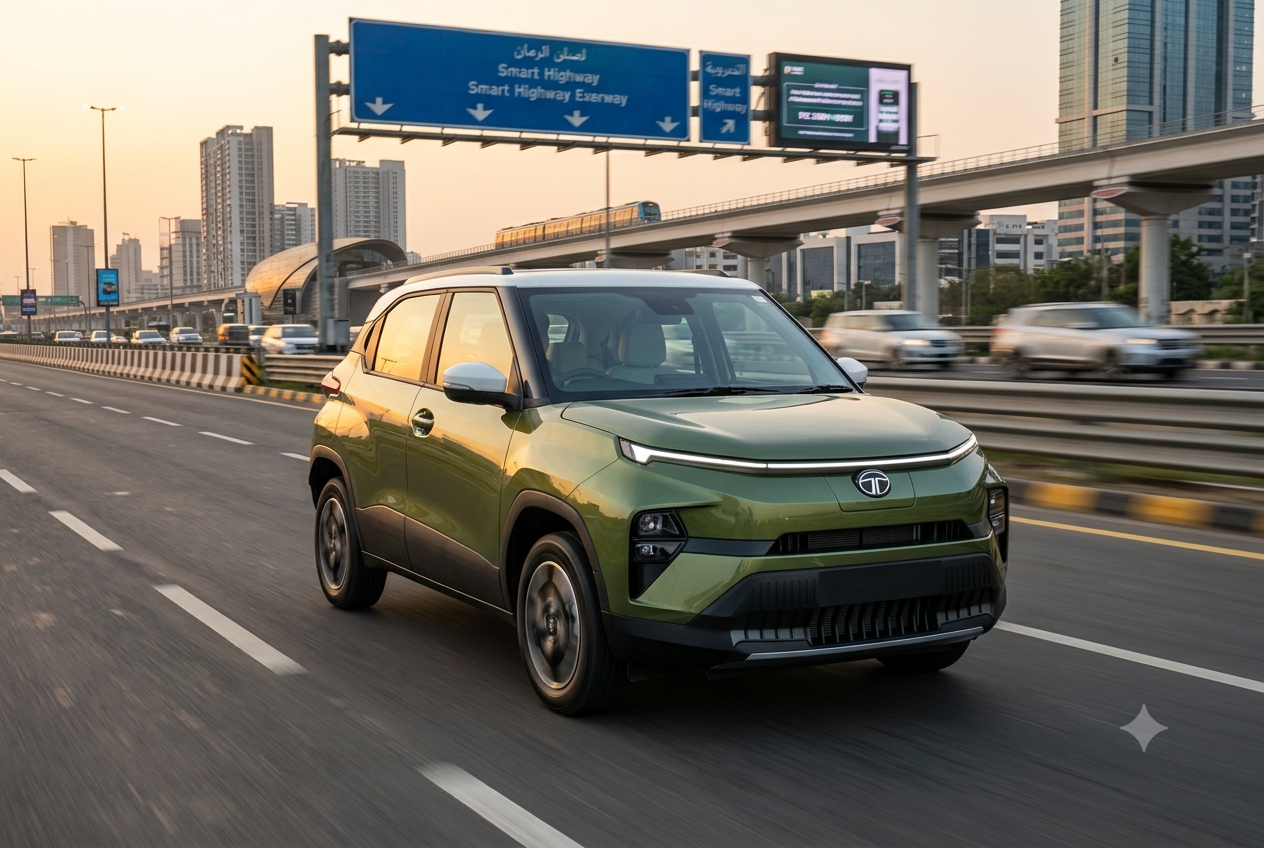
As demonstrated in the sales trajectory chart above, the Punch EV has grown by an astonishing 141.7 percent from its January volume of 2,120 units to 5,124 units in October. This steady climb underscores that demand for the model is organic and structural, rather than a transient festive blip.
Why the Tata Punch EV Shattered Sales Records
The Punch EV's breakout success is not accidental. It is the calculated result of product positioning, safety engineering, and competitive pricing aligning seamlessly with the requirements of urban and semi-urban Indian car buyers. Four foundational pillars explain why it crossed the 5,000-unit ceiling:
1. The Sub-₹10 Lakh Psychological Sweet Spot
With introductory ex-showroom pricing commencing at ₹9.99 Lakh for the Smart variant, the Punch EV demolished the price barrier that previously deterred mass-market buyers from considering an electric SUV. Before the Punch EV, electric SUVs with practical range were universally positioned above ₹14 Lakh. By offering an authentic high-riding SUV experience under ₹10 Lakh, Tata Motors broadened the addressable EV audience by a factor of four.
2. Bharat NCAP 5-Star Safety Benchmark
Safety has transitioned from an afterthought to a primary purchase criterion for Indian families. In official Bharat NCAP crash assessments, the Punch EV secured a stellar 5-Star Rating, posting 31.46 points out of 32 for Adult Occupant Protection (AOP) and 45.00 points out of 49 for Child Occupant Protection (COP). These scores rank among the highest ever recorded in Indian testing history, instilling immense parental and family confidence. Every single Punch EV trim leaves the showroom equipped with 6 airbags, Electronic Stability Program (ESP), hill-hold control, and ISOFIX child seat anchors as standard equipment.
3. Practical Micro-SUV Ergonomics for Indian Roads
Unlike low-slung electric hatchbacks that risk underbody battery scrapers over erratic speed breakers, the Punch EV boasts an unladen ground clearance of 190 mm alongside a generous approach and departure angle. Its commanding command driving position, 366-litre boot capacity, and compact 3,857 mm footprint make it effortless to pilot through dense Indian city traffic while effortlessly handling broken asphalt and monsoon waterlogging.
4. Dual Battery Architecture & Rapid Fast-Charging
Tata offered buyers two distinct operational envelopes tailored to differing commute patterns:
- Medium Range (25 kWh Battery): Certified ARAI range of 315 km, paired with an 82 PS / 114 Nm electric motor. Ideal for daily urban commuting (30–50 km per day), requiring charging only once every five to six days.
- Long Range (35 kWh Battery): Certified ARAI range of 421 km, driven by a punchier 122 PS / 190 Nm motor. Capable of seamless inter-city weekend trips (e.g., Mumbai to Pune or Delhi to Agra) with 50 kW DC fast charging that replenishes 10% to 80% state-of-charge in just 56 minutes.
India's Top 5 Electric Cars in October 2026: Sales Ranking
The historic 5,124-unit performance of the Punch EV placed it firmly at the summit of India's electric car dispatches for October 2026. Below is how the top electric models ranked across the industry:
Rank | Model | Brand | Oct 2026 Dispatches | Market Share in EVs | Base Ex-Showroom Price |
|---|---|---|---|---|---|
| 1 | Tata Punch EV | Tata Motors | 5,124 | 37.8% | ₹9.99 Lakh |
| 2 | MG Windsor EV | JSW MG Motor | 2,845 | 21.0% | ₹9.99 Lakh (BaaS) / ₹13.50L |
| 3 | Tata Nexon EV | Tata Motors | 2,190 | 16.1% | ₹12.49 Lakh |
| 4 | Tata Curvv EV | Tata Motors | 1,680 | 12.4% | ₹17.49 Lakh |
| 5 | MG Comet EV | JSW MG Motor | 940 | 6.9% | ₹6.99 Lakh |
Combined Top 5 EV Dispatches: 12,779 units. Total Industry EV Volume: ~13,560 units.
Tata Motors commanded an overwhelming 66.3 percent market share of all electric passenger vehicles dispatched in India in October 2026, spearheaded by the trio of Punch EV, Nexon EV, and the newly launched Curvv EV.
The Competitive Dynamic: Punch EV vs. MG Windsor EV
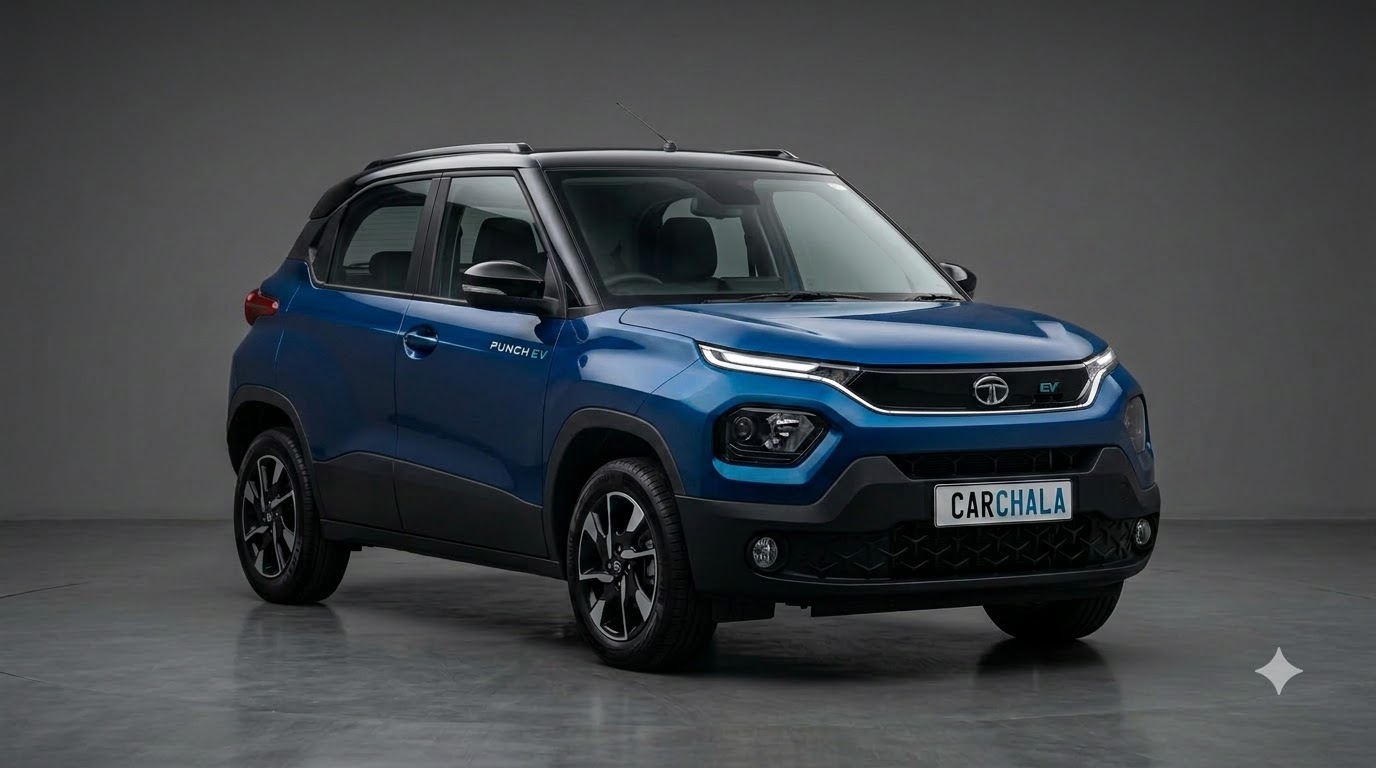
While the Punch EV dominates the volume charts, the rapid ascent of the MG Windsor EV to second place with 2,845 dispatches within weeks of launch marks the beginning of an intense product duel.
Both vehicles technically compete around the ₹10 Lakh to ₹15 Lakh price corridor, but they target radically different customer sensibilities:
- The Tata Punch EV appeals to the self-driving family commuter. Its rugged high-clearance SUV form factor, physical cabin controls, straightforward outright battery ownership, and unmatched 5-star BNCAP safety pedigree make it the default choice for buyers transitioning from petrol hatchbacks like the Swift, Baleno, or WagonR.
- The MG Windsor EV targets executive passenger comfort. Styled as an aerodynamic CUV with luxurious 'Aero Lounge' 135-degree reclining rear seats and an expansive 15.6-inch touchscreen, it appeals to chauffeur-driven urban commuters and tech-first EV enthusiasts leveraging its innovative Battery-as-a-Service (BaaS) rental model.
Prospective buyers can compare variant specifications, dimensions, and real-world range side-by-side using our dedicated car comparison engine.
Real-World Ownership Economics: What 5,000 Buyers Discovered
The driving force behind the Punch EV's surging adoption is the compelling economic case it presents against rising petrol pump prices. Following international crude oil benchmark fluctuations, retail petrol hovers between ₹102 and ₹111 per litre across major metros like Delhi, Mumbai, and Bengaluru.
Consider the monthly operational economics for an urban commuter driving 1,500 km per month (50 km per day):
Expense Dimension | Standard 1.2L Petrol SUV (Punch ICE) | Tata Punch EV (Long Range 35 kWh) | Monthly Savings |
|---|---|---|---|
| Fuel / Energy Tariff | ₹102.00 per litre | ₹7.50 per kWh (Home AC slab) | — |
| Real-World Efficiency | 13.5 kmpl (city commute) | 8.8 km per kWh (real-world) | — |
| Monthly Fuel Expense | ₹11,333 | ₹1,278 | ₹10,055 Saved |
| Scheduled Service Cost | ~₹850 / month | ~₹250 / month | ₹600 Saved |
| Total Monthly Running Cost | ₹12,183 | ₹1,528 | ₹10,655 Saved |
| 3-Year Running Cost | ₹4,38,588 | ₹55,008 | ₹3,83,580 Saved |
Calculations based on prevailing Delhi-NCR residential power tariffs and IOCL retail fuel prices. Drivers can track live pump variations through our live fuel prices tool or calculate loan EMIs using our car EMI calculator.
Over a 3-year ownership cycle spanning 45,000 kilometres, a Punch EV owner saves over ₹3.83 Lakh in direct running costs compared to an equivalent petrol vehicle. For commuters with higher running (e.g. 2,000+ km monthly), those savings comfortably exceed the initial price premium of the electric variant within 24 to 30 months.
What This Milestone Means for Indian Car Buyers
The Tata Punch EV's ascension past 5,000 units is a turning point for prospective automobile buyers across India:
- Depreciation & Resale Value Stability: High showroom volumes translate directly into healthy secondhand vehicle ecosystems. High-volume EVs enjoy widespread aftermarket battery servicing support, software updates, and robust resale values compared to niche low-volume electric models.
- Charging Infrastructure Expansion: With thousands of Punch EVs hitting city streets every month, public charging operators (Tata Power EZ Charge, Jio-bp pulse, Statiq, and Glida) are prioritizing fast-charger deployment along urban routes, office parks, and metro highways.
- Festive Buying Leverage: In response to the Punch EV's commanding volume, competitors are rolling out aggressive festive incentives. Buyers evaluating the EV market can explore our comprehensive breakdown of the best electric car deals ahead of Diwali to maximize purchase savings.
The Verdict
Crossing 5,000 monthly sales dispatches cements the Tata Punch EV's status as the undisputed people's electric car of India. By combining rugged micro-SUV proportions with accessible pricing, 5-star crash safety, and compelling operational economics, Tata Motors has proven that mainstream Indian consumers are prepared to embrace electric mobility en masse when the product formula is uncompromisingly tailored to domestic needs.
As year-end festive deliveries conclude and charging networks expand deeper into Tier-2 and Tier-3 geographies, the Punch EV has not merely broken a record — it has established a formidable new baseline for the entire Indian automotive industry.
Sources & Disclosures: Market dispatch data compiled from Auto Punditz wholesale analytics (October 2026), Ministry of Road Transport and Highways Vaahan vehicle registration disclosures, Bharat NCAP official crash assessment reports, and Tata Motors official financial communications. Running cost calculations assume prevailing Delhi residential electricity tariffs and ARAI certified energy consumption baselines.
Next story
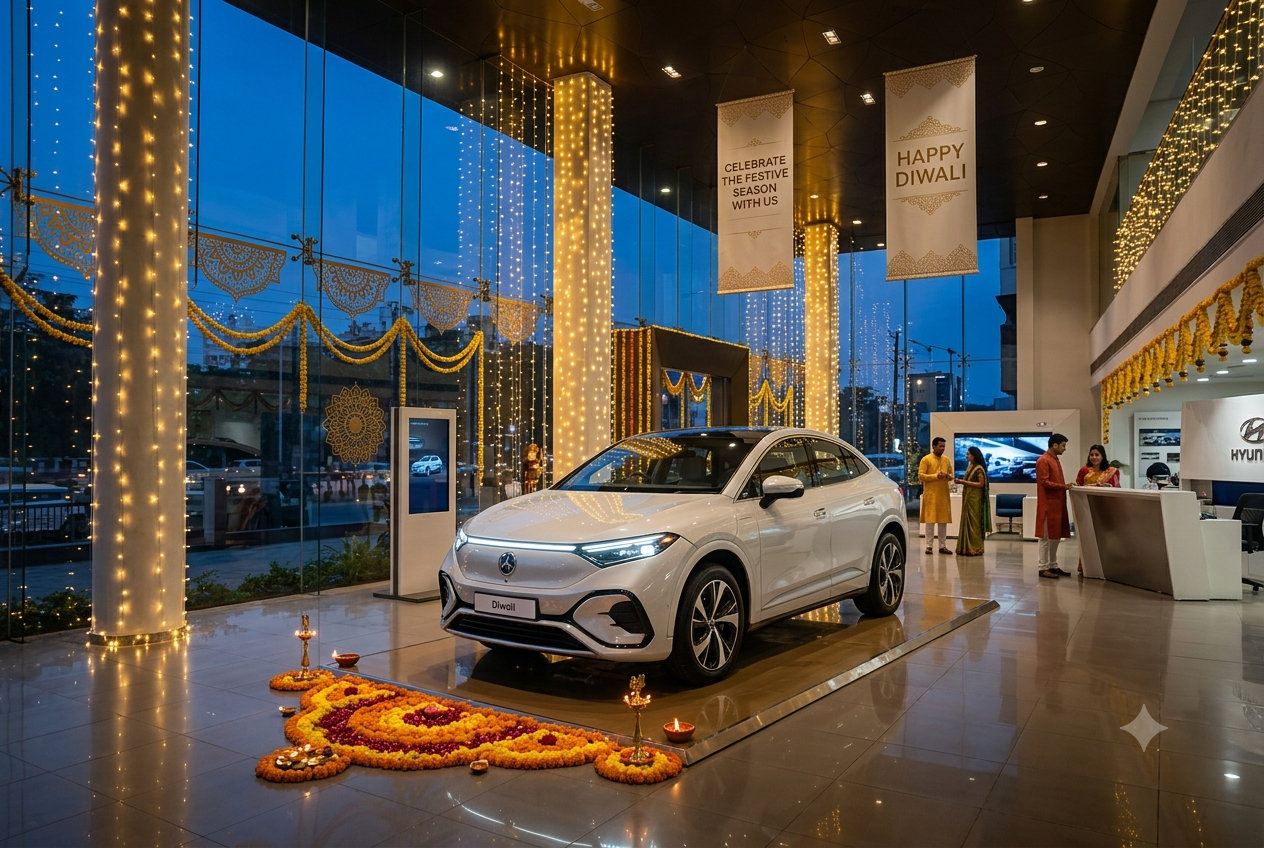
Best Deals on Electric Cars Ahead of Diwali 2026: Discounts Up to ₹3.35 Lakh on Tata Curvv EV, Punch EV, MG ZS EV & More